
Breaker keeps tripping
Work out what was running when the power went out and what to tell an electrician.
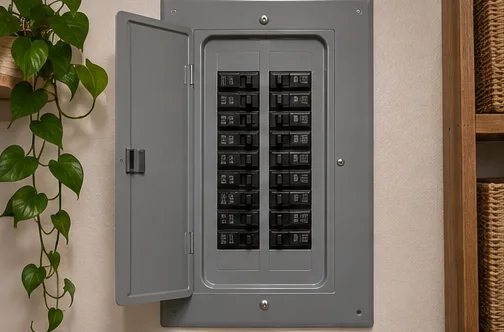
Short answer: Leave that circuit off. A breaker that keeps tripping is protecting the wiring from an overload or a fault, so it needs an electrician. Write down what was running and which rooms lost power so they can find the cause faster.
Check the warning signs below first.
Use this guide at your own risk. It’s general information, not professional advice. By using it, you agree to our Terms of Use and Safety Waiver.
Check for danger first
If any of these are present, stop here.
- Gas odor, smoke or fire. Leave immediately. From outside, call emergency services. For a gas odor, also call the gas utility. Leave lights and switches alone.
- Burning smell, scorch marks, a hot outlet or a buzzing panel. Stop and call an electrician. Stay clear of a suspect panel.
- Water near electrical equipment or exposed wiring. Keep away. Never cross water to reach a plug or breaker. Call a qualified electrician.
None of these warning signs? Open the checks
What to check
Have ready. A list of the rooms and appliances that lost power.
Leave the tripped circuit off.
Repeated trips need an electrician. Resetting it again to recreate the fault can put you at risk.
Recall what was on.
Two heat-producing appliances running together may suggest an overload. A trip with very little running is also important to report.
Map the outage from memory.
List the lights and outlets that went out together. If other rooms still have power, that helps the electrician narrow the search.
When to stop. A breaker that trips repeatedly needs a qualified electrician. Leave the panel cover in place and the affected circuit off.
What it costs
- The checks above: free.
- Electrician to replace a breaker: $100–$260.
- Most electricians charge a $100–$200 service call that usually covers the first hour.
National US ranges from 2025–2026 cost guides: HomeGuide · This Old House. Prices in your area may differ.
Common causes
- Overload. Too many things running on one circuit, like a space heater and a microwave, draw more current than the breaker allows. You can check
- A damaged cord or appliance. A worn cord or a wet or faulty appliance can trip the breaker the moment it’s plugged in or switched on. You can check
- Short circuit. A hot wire touching a neutral or ground wire sends a surge of current. The breaker trips instantly to prevent a fire. Call a pro
- Arc fault or ground fault. AFCI and GFCI breakers trip on sparking connections or current leaking to ground, often from damaged wiring. Call a pro
- Worn breaker. An old or damaged breaker can trip below its rating. Only an electrician should test or replace it. Call a pro
Sources: Eaton · Siemens AFCI/GFCI guide · Angi.
Further reading · ESFI
Still stuck? Get help with your exact problem.
Snap a photo and tell the app what you’ve tried. It walks you through your model, one safe step at a time, and tells you when to call a pro. Your first fix in the app is free.
The app is coming soon. Get one email the day it launches.
One email when the app launches. No spam. Privacy Policy