
AC keeps tripping the breaker
Reset the breaker once, check the two things you can see from outside the unit, and know when to leave it off.
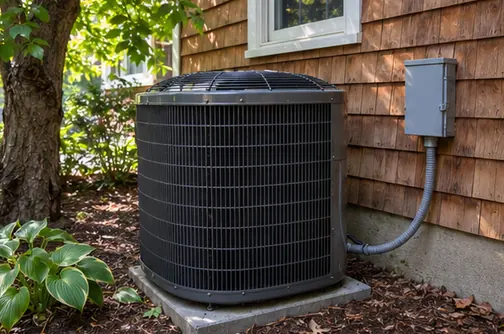
Short answer: A dirty filter or a dirty outdoor coil can make the AC draw more power, but repeat trips often mean a failing capacitor, compressor or wiring. Reset the breaker once, replace a dirty filter and check the outdoor unit from outside. If it trips again, leave it off and call an HVAC technician.
Check the warning signs below first.
Use this guide at your own risk. It’s general information, not professional advice. By using it, you agree to our Terms of Use and Safety Waiver.
Check for danger first
If any of these are present, stop here.
- Gas odor, smoke or fire. Leave immediately. From outside, call emergency services. For a gas odor, also call the gas utility. Leave lights and switches alone.
- Burning smell, scorch marks, a hot outlet or a buzzing panel. Stop and call an electrician. Stay clear of a suspect panel.
- Water near electrical equipment or exposed wiring. Keep away. Never cross water to reach a plug or breaker. Call a qualified electrician.
None of these warning signs? Open the checks
What to check
Have ready. A flashlight, a new air filter in the right size, and the brand and model from the label on the outdoor unit.
Reset the breaker once.
Turn the AC off at the thermostat. Switch the AC breaker fully OFF, wait about 5 minutes, then switch it back ON. If it trips again, leave it off.
Check the air filter.
With the system off, pull out the filter. If it’s gray or clogged, replace it. A clogged filter makes the system work harder and draw more power.
Look at the outdoor unit from outside.
Don’t open anything. Look at the coil fins on the sides for heavy dirt, leaves or fluff, which make the unit work harder. With the system off, clear debris off the top and keep plants at least 2 feet away.
Leave the panels closed.
Never open the outdoor unit’s panels or the disconnect box next to it. The capacitor, contactor and wiring inside carry a shock hazard.
When to stop. If the breaker trips a second time, leave it off and call an HVAC technician. Shut the system off and call right away if you hear buzzing, smell burning or see ice on the coils. A failing capacitor, compressor or wiring is a job for an HVAC pro or a licensed electrician.
What it costs
- The checks above: free.
- Pro AC repair: $250–$700, about $375 on average.
- Common fixes: a capacitor, $150–$400; a relay or contactor, $100–$450. A new compressor runs $1,000–$3,000 or more.
- Diagnostic fee: about $75–$150.
National US ranges from 2025–2026 cost guides: Fixr · This Old House. Prices in your area may differ.
Common causes
- Dirty air filter. Restricted airflow makes the blower work harder and draw more electricity. You can check
- Dirty or blocked outdoor coil. Dirt and debris on the outdoor coil make the unit less efficient and can raise its current draw. You can check
- Failing capacitor. A bad capacitor can make the unit draw too much power, and it carries a shock hazard. Call a pro
- Compressor problems. A worn or overheating compressor can pull more current than the circuit allows. Call a pro
- Wiring or breaker faults. Loose connections, damaged wiring or a worn breaker can cause trips. Call a pro
- Low refrigerant. A leak strains the compressor and needs a technician to repair and recharge. Call a pro
Sources: Carrier · Trane · Trane coils · HVAC.com.
Further reading · Carrier
Still stuck? Get help with your exact problem.
Snap a photo and tell the app what you’ve tried. It walks you through your model, one safe step at a time, and tells you when to call a pro. Your first fix in the app is free.
The app is coming soon. Get one email the day it launches.
One email when the app launches. No spam. Privacy Policy