
Extension cord getting hot
Find out whether the cord is overloaded, too light for the job, coiled or damaged, and when to replace it or call an electrician.
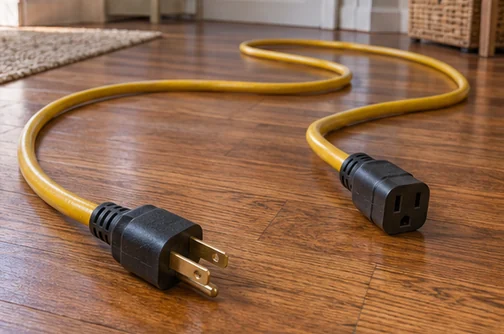
Short answer: A hot extension cord is usually overloaded, too light for what’s plugged in, coiled up, or damaged. Unplug it, check its rating against the load, uncoil it, and replace it if it’s damaged. If the plug or wall outlet is scorched, melted or hot, turn off the breaker and call a licensed electrician.
Check the warning signs below first.
Use this guide at your own risk. It’s general information, not professional advice. By using it, you agree to our Terms of Use and Safety Waiver.
Check for danger first
If any of these are present, stop here.
- Gas odor, smoke or fire. Leave immediately. From outside, call emergency services. For a gas odor, also call the gas utility. Leave lights and switches alone.
- Burning smell, scorch marks, a hot outlet or a buzzing panel. Stop and call an electrician. Stay clear of a suspect panel.
- Water near electrical equipment or exposed wiring. Keep away. Never cross water to reach a plug or breaker. Call a qualified electrician.
None of these warning signs? Open the checks
What to check
Have ready. The cord’s tag or packaging, the wattage or amp labels of what’s plugged in, and a flashlight.
Unplug it.
A hot cord is a warning sign that it may be overloaded. Turn off what’s plugged in and pull the cord out by the plug, not the wire. Let it cool before you handle it.
Check the rating against the load.
The cord’s rating is on its tag or packaging, and the wire size is printed on the cord. Add up what you plug in and stay under the rating. Plug space heaters and other large appliances straight into a wall outlet, never into an extension cord or power strip.
Uncoil it.
A cord left coiled or wound on a reel traps heat, and it gets hotter under a heavy load. Unroll it all the way before using it.
Look it over, end to end.
With it unplugged, check the plug, the socket end and the whole length for cracks, cuts, melting or scorch marks. Replace a damaged cord. Don’t tape it. Don’t run cords under carpets or furniture or through doorways.
When to stop. If the plug, cord or wall outlet is scorched, melted or hot, or the outlet sparks or smells burnt, stop using it and turn off that outlet’s breaker. Call a licensed electrician. If you rely on extension cords every day, have an electrician add outlets. Extension cords are only for temporary use.
What it costs
- The checks above: free.
- Electrician to install an outlet: $120–$200, about $141 on average.
- One outlet or switch installed: about $296. Most jobs run $253–$711.
National US ranges from 2025–2026 cost guides: Fixr · Thumbtack. Prices in your area may differ.
Common causes
- Too much plugged in. Appliances that use more watts than the cord can handle make it overheat. You can check
- Cord too light for the appliance. A cord rated for small loads overheats with a heater or other large appliance. You can check
- Cord left coiled. Coiled cord can’t release heat, so it gets hotter under load. You can check
- Damaged cord or worn plug. Hot plugs and sockets are often caused by worn connections to the cord’s wires. You can check
- Chained cords or strips. Plugging cords or power strips into each other adds resistance and heat and can overload the circuit. You can check
- Worn wall outlet. An outlet that feels warm is a serious problem and needs an electrician. Call a pro
Sources: CPSC · Brennenstuhl · Office of Congressional Workplace Rights · This Old House.
Further reading · U.S. Consumer Product Safety Commission
Still stuck? Get help with your exact problem.
Snap a photo and tell the app what you’ve tried. It walks you through your model, one safe step at a time, and tells you when to call a pro. Your first fix in the app is free.
The app is coming soon. Get one email the day it launches.
One email when the app launches. No spam. Privacy Policy