
Plug falls out of the outlet
Tell whether worn outlet contacts or the plug itself is the problem, and when a loose fit has become a heat risk.
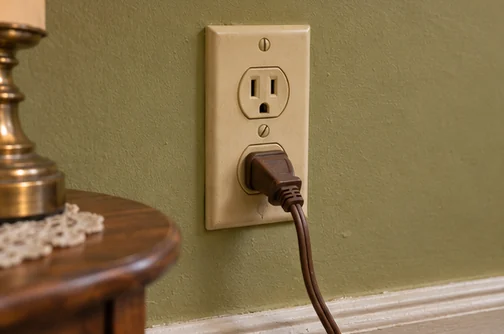
Short answer: Plugs that fall out usually mean the outlet’s contacts are worn, though bent prongs or a heavy charger can cause it too. Try another plug here, try this plug elsewhere, and take heavy chargers off the outlet. A loose outlet can overheat, so stop using it and have a licensed electrician replace it.
Check the warning signs below first.
Use this guide at your own risk. It’s general information, not professional advice. By using it, you agree to our Terms of Use and Safety Waiver.
Check for danger first
If any of these are present, stop here.
- Gas odor, smoke or fire. Leave immediately. From outside, call emergency services. For a gas odor, also call the gas utility. Leave lights and switches alone.
- Burning smell, scorch marks, a hot outlet or a buzzing panel. Stop and call an electrician. Stay clear of a suspect panel.
- Water near electrical equipment or exposed wiring. Keep away. Never cross water to reach a plug or breaker. Call a qualified electrician.
None of these warning signs? Open the checks
What to check
Have ready. A lamp or charger that fits snugly elsewhere, and a second outlet in another room.
Try a different plug in this outlet.
Plug in a lamp or charger that fits snugly in other outlets. If it slips out here too, the outlet’s contacts are likely worn. An outlet that no longer holds plugs firmly needs replacing.
Try this plug in a different outlet.
If the same plug is loose in several outlets, the plug is the problem. Look for bent or damaged prongs, but don’t bend them back. Replace a bad charger, and have an electrician replace the plug on a lamp or appliance.
Take weight off the outlet.
Unplug heavy chargers or adapters that hang straight from this outlet. Their weight pulls down on the plug and can work it loose from worn contacts.
Never hold or wedge a plug in.
If the outlet or plug feels warm, buzzes, or looks brown or black, unplug everything and stop using that outlet. A plug that doesn’t fit snugly can overheat.
When to stop. If different plugs fall out of this outlet, or it’s warm, cracked, scorched or buzzing, stop using it and call a licensed electrician. A loose outlet can cause overheating and fires, and replacing it means working on the wiring.
What it costs
- The checks above: free.
- Electrician to replace a worn outlet: $120–$200.
- Electrical outlet repair: $146–$394 on average.
National US ranges from 2025–2026 cost guides: Fixr · Thumbtack. Prices in your area may differ.
Common causes
- Worn outlet contacts. The metal contacts inside an outlet lose their grip with years of use, so plugs fit loosely or fall out. Call a pro
- Bent or damaged prongs. If the same plug is loose in several outlets, the prongs on the plug are the problem, not the outlet. You can check
- Heavy charger or adapter. A bulky plug-in charger pulls down on the plug and works it loose from contacts that are already weak. You can check
- Old outlet or bad wiring. An old outlet or poor wiring behind it can cause a loose fit and a risk of sparks, arcing and fire. Call a pro
Sources: Leviton · Leviton replacement FAQ · ESFI safety checkup · Mister Sparky · EngineerFix.
Further reading · Leviton
Still stuck? Get help with your exact problem.
Snap a photo and tell the app what you’ve tried. It walks you through your model, one safe step at a time, and tells you when to call a pro. Your first fix in the app is free.
The app is coming soon. Get one email the day it launches.
One email when the app launches. No spam. Privacy Policy