
Outlet sparking
Tell a small, normal spark from one that means a short, a worn outlet or overheating, and know when to stop using it.
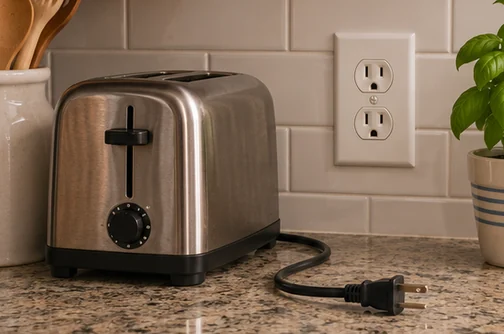
Short answer: A tiny blue spark that vanishes as you plug in is usually harmless. Large, yellow or white, lingering or repeated sparks, popping, or a burning smell point to a short, a worn outlet or an overload. Check the plug and spread out the load, and for anything more than a tiny spark, turn off the breaker and call a licensed electrician.
Check the warning signs below first.
Use this guide at your own risk. It’s general information, not professional advice. By using it, you agree to our Terms of Use and Safety Waiver.
Check for danger first
If any of these are present, stop here.
- Gas odor, smoke or fire. Leave immediately. From outside, call emergency services. For a gas odor, also call the gas utility. Leave lights and switches alone.
- Burning smell, scorch marks, a hot outlet or a buzzing panel. Stop and call an electrician. Stay clear of a suspect panel.
- Water near electrical equipment or exposed wiring. Keep away. Never cross water to reach a plug or breaker. Call a qualified electrician.
None of these warning signs? Open the checks
What to check
Have ready. The location of your breaker panel, a flashlight, and a note of what was plugged in when it sparked.
Judge the spark.
A tiny blue spark that is gone in a flash when you plug something in is usually harmless. Sparks that are large, yellow or white, linger, jump out of the outlet holes, pop, or come with a burning smell are not.
Turn off the breaker for anything more than a tiny spark.
If you smell smoke or melting plastic, turn off that outlet’s breaker right away. Leave it off and don’t use the outlet until an electrician has checked it.
Look at the plug and cord.
With the device unplugged, check for a bent, loose or scorched plug or a frayed cord. Stop using a device with a damaged cord or plug.
Spread out the load.
Too many devices on one outlet raises the risk of sparking. Move high-wattage appliances like heaters to outlets on other circuits.
When to stop. If the outlet sparks every time, the sparks are large, yellow or white, or it pops, smells burnt, is scorched or feels warm, turn off its breaker and call a licensed electrician. Don’t open the outlet.
What it costs
- The checks above: free.
- Electrician to fix an outlet that isn’t working: $149–$466.
- Outlet installation: $120–$200, about $141 on average.
- Electrician service visit: about $176–$327.
National US ranges from 2025–2026 cost guides: Thumbtack · Fixr outlets · Fixr. Prices in your area may differ.
Common causes
- Normal plug-in spark. A plug can draw a tiny, brief blue spark as it touches the contacts, which is usually harmless. You can check
- Too much plugged in. Too many devices or high-wattage appliances on one outlet or circuit cause overheating and sparking. You can check
- Worn outlet. Old outlets lose their grip, so plugs fit loosely and the worn contacts can arc. Call a pro
- Loose wiring. Electricity jumps the gap at a poor connection, which makes sparks and heat. Call a pro
- Short circuit. A hot wire touching a neutral or ground wire sends a surge of current that can cause heat and fire. Call a pro
- Water in the outlet. Leaks in the wall or water splashing through the cover can cause sparking and shorts. Call a pro
Sources: Mister Sparky · HomeTips · UL.
Further reading · UL
Still stuck? Get help with your exact problem.
Snap a photo and tell the app what you’ve tried. It walks you through your model, one safe step at a time, and tells you when to call a pro. Your first fix in the app is free.
The app is coming soon. Get one email the day it launches.
One email when the app launches. No spam. Privacy Policy