
Light switch warm or hot
Tell normal dimmer warmth from a switch that is overloaded or failing, and know when to turn the breaker off.
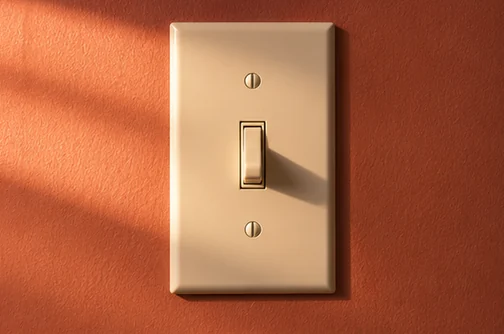
Short answer: A dimmer’s plate can feel very warm when the lights are on, and that is normal. A switch that is hot, buzzes, smells burnt or is warm with the lights off points to an overload, the wrong bulbs or a wiring problem. Check the bulb wattage and LED compatibility, and if it’s hot, turn off the breaker and call a licensed electrician.
Check the warning signs below first.
Use this guide at your own risk. It’s general information, not professional advice. By using it, you agree to our Terms of Use and Safety Waiver.
Check for danger first
If any of these are present, stop here.
- Gas odor, smoke or fire. Leave immediately. From outside, call emergency services. For a gas odor, also call the gas utility. Leave lights and switches alone.
- Burning smell, scorch marks, a hot outlet or a buzzing panel. Stop and call an electrician. Stay clear of a suspect panel.
- Water near electrical equipment or exposed wiring. Keep away. Never cross water to reach a plug or breaker. Call a qualified electrician.
None of these warning signs? Open the checks
What to check
Have ready. The wattage of every bulb the switch controls, the dimmer’s box or instructions if you have them, and the location of your breaker panel.
Know what’s normal.
A dimmer makes a little heat, so its wall plate can feel very warm while the lights are on. That is normal, according to Lutron. A switch that is hot, buzzes, smells burnt or is warm with the lights off is not.
Turn off the breaker if it’s hot.
If the switch is too hot to keep your hand on, buzzes or smells burnt, turn off its breaker and leave the switch off. Don’t take the cover plate off.
Add up the bulb wattage.
Every dimmer has a load limit, the total wattage of all the lights it controls, printed on its box or instructions. If your bulbs add up to more, remove bulbs or use lower-wattage LEDs. A dimmer that shares a wall box with other switches can have a lower limit.
Check that the bulbs suit the dimmer.
LEDs need a dimmer made for LED loads. Look for an LED marking in the dimmer’s instructions or use the bulb maker’s compatibility list. A mismatch can make the switch buzz and the lights flicker.
When to stop. If the switch is hot, buzzing, discolored or smells burnt, or stays warm with the lights off, turn off its breaker and call a licensed electrician. Loose wiring or a failing switch is inside the wall box.
What it costs
- The checks above: free.
- Electrician to replace a light switch: $100–$200, about $150 on average.
- Dimmer installed: about $75–$100, including a $10–$25 dimmer.
- Most electricians charge $40–$120 an hour.
National US ranges from 2025–2026 cost guides: Fixr · This Old House. Prices in your area may differ.
Common causes
- Normal dimmer heat. Dimmers give off a small amount of heat through the metal front and the wall plate, so a very warm plate can be normal. You can check
- Too many watts on the dimmer. Bulbs that add up to more than the dimmer’s load limit make it run hotter than it should. You can check
- Bulbs that don’t suit the dimmer. An older dimmer built for incandescent bulbs can buzz, flicker or misbehave with LEDs. You can check
- Several switches in one box. When a dimmer shares a wall box with other switches, its load limit can be lower than the number on the box. Call a pro
- Loose wiring or a worn switch. Loose wires, poor connections or a worn switch add resistance and make heat inside the wall box. Call a pro
Sources: Lutron · Mr. Electric · Feit Electric · UL.
Further reading · Lutron
Still stuck? Get help with your exact problem.
Snap a photo and tell the app what you’ve tried. It walks you through your model, one safe step at a time, and tells you when to call a pro. Your first fix in the app is free.
The app is coming soon. Get one email the day it launches.
One email when the app launches. No spam. Privacy Policy