
Pool pump not turning on
Tell whether the timer, a tripped breaker or GFCI, or a clogged basket is the problem, or whether the motor needs a pro.
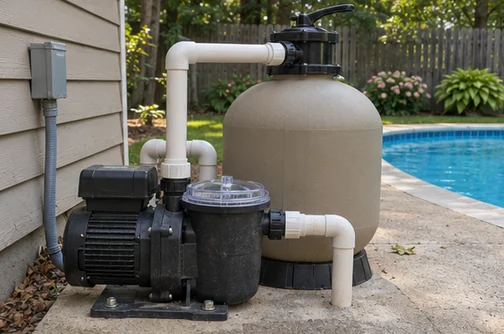
Short answer: A wrong timer setting, a tripped breaker or GFCI, or a clogged basket is often the cause. Check the schedule, reset the breaker or GFCI once, and clean the basket with the power off. If the motor hums or the GFCI trips again, stop and call a pool pro or electrician.
Check the warning signs below first.
Use this guide at your own risk. It’s general information, not professional advice. By using it, you agree to our Terms of Use and Safety Waiver.
Check for danger first
If any of these are present, stop here.
- Gas odor, smoke or fire. Leave immediately. From outside, call emergency services. For a gas odor, also call the gas utility. Leave lights and switches alone.
- Burning smell, scorch marks, a hot outlet or a buzzing panel. Stop and call an electrician. Stay clear of a suspect panel.
- Water near electrical equipment or exposed wiring. Keep away. Never cross water to reach a plug or breaker. Call a qualified electrician.
None of these warning signs? Open the checks
What to check
Have ready. A flashlight, the pump’s manual, and where its breaker, GFCI and timer or automation panel are.
Check the timer or automation settings.
Make sure the pump’s switch is on and the timer or automation system is set to run now. A wrong schedule can keep the pump from starting.
Check the breaker and GFCI once.
Pool pumps are on a GFCI that can trip, often after a power outage. Reset a tripped GFCI or breaker once. If it trips again, leave it off. Hayward says that means current is leaking to ground, so don’t use the pump until it’s fixed.
Clean the strainer basket with the power off.
Turn the pump off at its breaker first. Remove the strainer cover, empty the basket, then refill the housing with water and close the cover. Never run the pump dry.
If the motor hums but won’t start, turn it off.
A humming motor that doesn’t turn can have debris jammed in the impeller or a failed start part. Hayward says a qualified repair pro should open the pump.
When to stop. If the motor hums, the breaker or GFCI trips again, or you see water near the motor or wiring, stop and call a pool pro or licensed electrician. Water and electricity together can kill. Motor, capacitor and wiring work is for a pro.
What it costs
- The checks above: free.
- Pro pool pump repair: $202–$941.
- Common fix: a new pump motor, $100–$500 plus about $150 labor; a new pump installed, $700–$1,300.
National US ranges from 2025–2026 cost guides: Thumbtack · Fixr. Prices in your area may differ.
Common causes
- Timer or schedule set wrong. If the timer isn’t working or isn’t set to run, the pump won’t start. You can check
- Tripped breaker or GFCI. A power outage or a fault can trip the pump’s GFCI, which stops the pump until it’s reset. You can check
- Clogged strainer basket. A basket loaded with debris blocks water flow and must be cleaned with the power off. You can check
- Jammed impeller. Debris inside the pump can jam the impeller, so the motor hums but doesn’t start. Call a pro
- Failed capacitor or motor. A faulty start capacitor or worn bearings need professional repair. Call a pro
- Low voltage or loose wiring. Undersized wiring or loose connections can stop the motor or make it shut off. Call a pro
Further reading · Hayward
Still stuck? Get help with your exact problem.
Snap a photo and tell the app what you’ve tried. It walks you through your model, one safe step at a time, and tells you when to call a pro. Your first fix in the app is free.
The app is coming soon. Get one email the day it launches.
One email when the app launches. No spam. Privacy Policy