
Well pump not working
Check the power to the pump and read the pressure gauge without touching live parts, then know when to call a licensed well contractor.
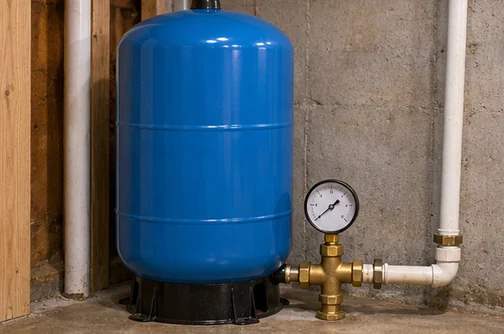
Short answer: A tripped breaker or switch, a failed pressure switch or tank, low water in the well or a worn pump are common reasons a well stops delivering water. Check the well switch and breaker once, read the pressure gauge, and leave the pressure switch alone because it’s live. If there’s still no water, call a licensed well contractor, and have the water tested after any work on the well.
Check the warning signs below first.
Use this guide at your own risk. It’s general information, not professional advice. By using it, you agree to our Terms of Use and Safety Waiver.
Check for danger first
If any of these are present, stop here.
- Gas odor, smoke or fire. Leave immediately. From outside, call emergency services. For a gas odor, also call the gas utility. Leave lights and switches alone.
- Burning smell, scorch marks, a hot outlet or a buzzing panel. Stop and call an electrician. Stay clear of a suspect panel.
- Water near electrical equipment or exposed wiring. Keep away. Never cross water to reach a plug or breaker. Call a qualified electrician.
None of these warning signs? Open the checks
What to check
Have ready. A flashlight, the location of the well pump’s breaker, and bottled water until the water is back and safe.
Check the breaker and the well switch.
Make sure any switch for the well pump is on. Check the well pump’s breaker. If it has tripped, switch it fully off and then on once. If it trips again, leave it off and call a well contractor.
Read the pressure gauge.
Look at the gauge near the pressure tank and note the reading. Many pumps start at about 30 or 40 psi and stop about 20 psi higher. A reading near zero with no water means the pump isn’t keeping up or isn’t running.
Leave the pressure switch alone.
The pressure switch is the small box on the pipe near the tank. It’s connected to electric power, so don’t open, tap or adjust it. If the pump clicks on and off every few seconds, the tank has likely lost its air charge; that’s also a job for a pro.
Think about low water.
Water can run short in a drought or after very heavy use, especially if the pump sits high in the well. Cut back on water use and tell the contractor what you noticed.
When to stop. If the power is on and there’s still no water, the breaker trips again, or the pump runs nonstop or clicks on and off, stop and call a licensed well contractor. Don’t open the pressure switch, the pump’s control box or the well cap. After any work on the well, have the water tested at a certified lab right away. Use bottled water if you’re told the well may be contaminated.
What it costs
- The checks above: free.
- Pro well pump replacement: $900–$2,500 on average, depending on the pump and well depth.
- Well inspection: about $358, usually $281–$455; a lab water test adds about $100–$300.
National US ranges from 2025–2026 cost guides: This Old House · Thumbtack. Prices in your area may differ.
Common causes
- Breaker or well switch off. A tripped breaker or a switch turned off leaves the pump without power; a breaker that trips again needs a pro. You can check
- Pressure switch problem. The switch tells the pump when to start and stop, and it’s connected to power, so only a licensed pro should work on it. Call a pro
- Pressure tank lost its air charge. Too little air in the tank makes the pump run a few seconds and shut off; tanks often last about 10 years. Call a pro
- Low water in the well. In drought or heavy use the water can drop below a pump that is set too high in the well. Call a pro
- Leak, stuck check valve or broken line. A pump that runs nonstop can mean a stuck check valve or a broken line between the well and the house. Call a pro
- Failed pump or motor. If the power and controls are fine and there’s still no water, the pump itself may need to be pulled and replaced. Call a pro
Sources: University of Nebraska–Lincoln Extension · U.S. EPA · CDC.
Further reading · University of Nebraska–Lincoln Extension
Still stuck? Get help with your exact problem.
Snap a photo and tell the app what you’ve tried. It walks you through your model, one safe step at a time, and tells you when to call a pro. Your first fix in the app is free.
The app is coming soon. Get one email the day it launches.
One email when the app launches. No spam. Privacy Policy