
Water heater smells like rotten eggs
Rule out a gas leak, then tell whether the smell comes from the water heater or from your water supply.
Short answer: If only the hot water smells, sulfate in the water is most likely reacting with the water heater’s anode rod. Rule out gas first, then compare the hot and cold taps; if cold smells too, get the water tested. A plumber or qualified servicer should replace the anode rod or chlorinate, not you.
Check the warning signs below first.
Use this guide at your own risk. It’s general information, not professional advice. By using it, you agree to our Terms of Use and Safety Waiver.
Check for danger first
If any of these are present, stop here.
- Gas odor, smoke or fire. Leave immediately. From outside, call emergency services. For a gas odor, also call the gas utility. Leave lights and switches alone.
- Burning smell, scorch marks, a hot outlet or a buzzing panel. Stop and call an electrician. Stay clear of a suspect panel.
- Water near electrical equipment or exposed wiring. Keep away. Never cross water to reach a plug or breaker. Call a qualified electrician.
None of these warning signs? Open the checks
What to check
Have ready. A clean glass, the water heater’s brand and model from the label on its side, and whether you’re on city water or a private well.
Make sure it’s not gas.
If the rotten-egg smell is in the air, not just in the water, it may be natural gas. Leave right away, tell others to leave, don’t touch light switches, and call the gas utility from outside or a neighbor’s house.
Smell the hot and the cold water.
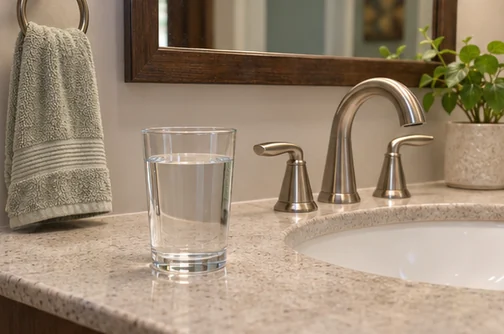
Fill a glass from the hot tap and smell it, then do the same with cold. If only the hot water smells, the cause is most likely inside the water heater. If both smell, the source is your water supply.
If cold water smells too, get it tested.
On a private well, have the water tested at a state-certified lab and follow its sampling instructions. Hydrogen sulfide alone doesn’t cause disease, but in rare cases the smell comes from sewage, so ask for a bacteria test too. On city water, call your water utility.
If only hot water smells, call a plumber.
Sulfate in the water reacts with the anode rod inside the tank and makes the smell. The usual fix is a less-active anode rod, sometimes with chlorination, put in by a plumber or qualified servicer. Don’t remove the rod or turn up the temperature yourself: running without a rod shortens the tank’s life and can void the warranty, and hotter water raises scald risk.
When to stop. If you smell gas in the air, get out and call the gas utility from outside. For a hot-water-only smell, call a plumber or water heater servicer about the anode rod. If both taps smell on a well, get a certified lab test and talk to a well contractor about treatment.
What it costs
- The checks above: free.
- Water heater repair for a bad smell: $200–$600.
- Common fix: a new anode rod, $125–$300.
- Water heater repairs in general run $297–$1,198.
National US ranges from 2025–2026 cost guides: Fixr · Thumbtack. Prices in your area may differ.
Common causes
- Sulfate reacting with the anode rod. Water high in sulfate reacts with the magnesium anode rod in the tank and makes hydrogen sulfide gas. Call a pro
- Sulfur bacteria in the well or plumbing. These bacteria make hydrogen sulfide; chlorinating the well can treat them, but they may come back. Call a pro
- Hydrogen sulfide in the well water. It occurs naturally in groundwater, so both hot and cold taps smell, and the treatment depends on how much a lab finds. Call a pro
- Low tank temperature. GE says raising the tank to 140°F can reduce the odor in some cases, but hotter water raises scald risk, so let a pro decide. Call a pro
Sources: GE Appliances · Connecticut Department of Public Health · NDSU Extension · A. O. Smith manual · Connecticut PURA (gas safety).
Further reading · GE Appliances
Still stuck? Get help with your exact problem.
Snap a photo and tell the app what you’ve tried. It walks you through your model, one safe step at a time, and tells you when to call a pro. Your first fix in the app is free.
The app is coming soon. Get one email the day it launches.
One email when the app launches. No spam. Privacy Policy