
Water heater making noise
Tell a normal sound from sediment in the tank, and from a hissing or screeching sound that means stop.
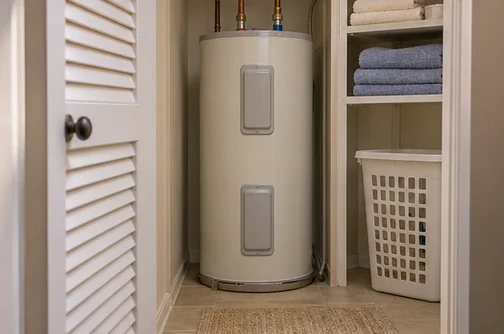
Short answer: Popping or rumbling is usually sediment on the bottom of the tank, and light ticking is usually normal. Name the sound, look for water around the base and relief valve, and flush only by the manual or have a pro do it. Hissing, screeching or a relief valve letting go means turn the heater off and call a plumber.
Check the warning signs below first.
Use this guide at your own risk. It’s general information, not professional advice. By using it, you agree to our Terms of Use and Safety Waiver.
Check for danger first
If any of these are present, stop here.
- Gas odor, smoke or fire. Leave immediately. From outside, call emergency services. For a gas odor, also call the gas utility. Leave lights and switches alone.
- Burning smell, scorch marks, a hot outlet or a buzzing panel. Stop and call an electrician. Stay clear of a suspect panel.
- Water near electrical equipment or exposed wiring. Keep away. Never cross water to reach a plug or breaker. Call a qualified electrician.
None of these warning signs? Open the checks
What to check
Have ready. A flashlight, the heater’s manual or the label on its side, and the year it was installed.
Name the sound.
Light ticking or clicking is usually normal; pipes and heat traps expand as they warm. Steady humming is common on electric heaters while they heat. Popping, crackling or rumbling usually means sediment on the bottom of a tank.
Look around the heater.
With a flashlight, check the floor around the base and the pipe from the relief valve on the side or top. Don’t touch the relief valve or its pipe; the water can be scalding.
Check the age and the last flush.
Makers recommend flushing a tank about once a year, more often with hard water. A heater that is 8–12 years old or more and has never been flushed is more likely to be noisy.
Flush only by the manual, or have a pro do it.
A flush drains hot water. Follow your heater’s manual exactly, including turning the heater off and letting the water cool first. If you’re not sure, have a plumber flush it.
When to stop. If you hear hissing, sizzling or screeching, or water or steam comes from the relief valve, turn the heater off the way its manual says and call a plumber. Never cap or plug the relief valve. If the noise continues after a flush, or the tank leaks, call a plumber too.
What it costs
- The checks above: free.
- Pro repair for a noisy water heater: $150–$600, depending on the cause.
- Flushing out a clogged tank: $150–$400.
- Water heater repair in general: $297–$1,198 national average range.
National US ranges from 2025–2026 cost guides: Fixr · Thumbtack. Prices in your area may differ.
Common causes
- Sediment in the tank. Minerals settle on the bottom and trap steam bubbles that pop as they escape; flushing removes them. Call a pro
- Normal ticking or humming. Pipes and heat traps tick as they expand, and electric heaters hum while the elements heat. You can check
- Water hitting a hot burner or a leaking element gasket. Hissing or sizzling can mean water is reaching hot parts, which needs a professional right away. Call a pro
- Relief valve or pressure problem. Screeching, or a relief valve that weeps or releases hot water, points to high pressure, thermal expansion or a bad thermostat. Call a pro
- Water hammer in the pipes. Knocking or banging usually comes from water stopping suddenly in the plumbing; an arrestor or pressure fix quiets it. Call a pro
Sources: Rheem · A. O. Smith · A. O. Smith Bulletin 52.
Further reading · Rheem
Still stuck? Get help with your exact problem.
Snap a photo and tell the app what you’ve tried. It walks you through your model, one safe step at a time, and tells you when to call a pro. Your first fix in the app is free.
The app is coming soon. Get one email the day it launches.
One email when the app launches. No spam. Privacy Policy