
Cloudy or milky tap water
Tell whether white, cloudy water is harmless air or a sign of particles, a water heater problem or water that needs testing.
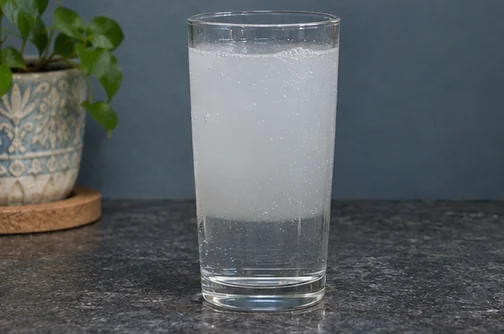
Short answer: Milky water that clears from the bottom of the glass up is harmless air. Do the glass test, compare hot and cold, check whether one faucet’s aerator is the cause, and run the water after nearby work. If it doesn’t clear or leaves particles, don’t drink it and call your water utility, or test a well.
Check the warning signs below first.
Use this guide at your own risk. It’s general information, not professional advice. By using it, you agree to our Terms of Use and Safety Waiver.
Check for danger first
If any of these are present, stop here.
- Gas odor, smoke or fire. Leave immediately. From outside, call emergency services. For a gas odor, also call the gas utility. Leave lights and switches alone.
- Burning smell, scorch marks, a hot outlet or a buzzing panel. Stop and call an electrician. Stay clear of a suspect panel.
- Water near electrical equipment or exposed wiring. Keep away. Never cross water to reach a plug or breaker. Call a qualified electrician.
None of these warning signs? Open the checks
What to check
Have ready. A clear glass, white vinegar, a small bowl and the phone number of your water utility.
Do the glass test.
Fill a clear glass and set it on the counter. If it clears from the bottom up within a few minutes, the cloudiness is tiny air bubbles. They’re harmless and won’t damage your plumbing.
Compare hot and cold.
Hot water often looks milkier than cold because heating releases air. If hard white particles settle in the glass instead, they may be mineral scale or pieces of a broken part from the water heater.
Check whether it’s one faucet.
An aerator mixes air into the water on purpose. If only one faucet looks milky and an outdoor faucet doesn’t, unscrew that aerator and clean it in white vinegar.
Run the water after nearby work.
A main break or hydrant use nearby can push air into the pipes and make faucets spurt. Leaving the faucet open for a minute or two should clear it.
When to stop. If the water doesn’t clear from the bottom of the glass within several minutes, leaves particles, or smells or tastes odd, don’t drink it and call your water utility. On a private well, test it at a state-certified lab. Call a plumber for particles from the water heater.
What it costs
- The checks above: free.
- Professional well water testing: $100–$500.
- Water heater dip tube replacement: $100–$250.
National US ranges from 2025–2026 cost guides: This Old House · Fixr. Prices in your area may differ.
Common causes
- Air bubbles. Cold water under pressure holds dissolved air that comes out as tiny bubbles at the tap, which is completely harmless. You can check
- Faucet aerator. Aerators add air on purpose, so one milky faucet often points to its aerator. You can check
- Air from a main break or hydrant use. Work on the water system can push large amounts of air into pipes and make faucets spurt. You can check
- Water heater dip tube or scale. Hard white particles that settle may come from a failing dip tube or mineral buildup in the tank. Call a pro
- A change in well water. If a well’s color, taste or smell changes, it should be tested at a state-certified lab. Call a pro
Sources: Tucson Water · USGS · Portland Water Bureau · CDC.
Further reading · Tucson Water
Still stuck? Get help with your exact problem.
Snap a photo and tell the app what you’ve tried. It walks you through your model, one safe step at a time, and tells you when to call a pro. Your first fix in the app is free.
The app is coming soon. Get one email the day it launches.
One email when the app launches. No spam. Privacy Policy