
Water softener not working
Check the power and clock, the salt level and a salt bridge, and the bypass valve before calling a water treatment pro.
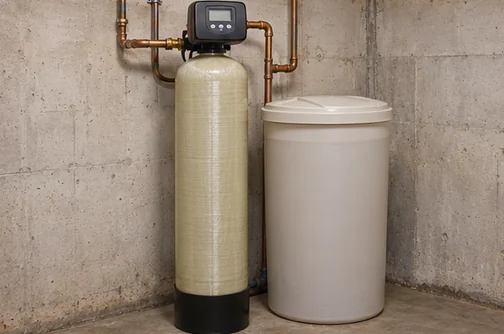
Short answer: A salt bridge, low salt, a bypass valve left in bypass or a clock reset by a power outage are common reasons a softener stops softening. Check the power and time, the salt and any crust, and the bypass position, then run a regeneration and wait a day. If the water is still hard, call a water treatment pro to check the resin, injector or control valve.
Check the warning signs below first.
Use this guide at your own risk. It’s general information, not professional advice. By using it, you agree to our Terms of Use and Safety Waiver.
Check for danger first
If any of these are present, stop here.
- Gas odor, smoke or fire. Leave immediately. From outside, call emergency services. For a gas odor, also call the gas utility. Leave lights and switches alone.
- Burning smell, scorch marks, a hot outlet or a buzzing panel. Stop and call an electrician. Stay clear of a suspect panel.
- Water near electrical equipment or exposed wiring. Keep away. Never cross water to reach a plug or breaker. Call a qualified electrician.
None of these warning signs? Open the checks
What to check
Have ready. A flashlight, a broom handle, salt made for softeners, and the softener’s manual.
Check the power and the clock.
The display should show the time of day and not be flashing. Make sure it’s plugged in, the outlet works and any wall switch for that outlet is on. After a power outage, set the time and settings again by the manual, or it may regenerate at the wrong time.
Check the salt and look for a salt bridge.
Keep the salt tank at least a quarter full. Push a broom handle down into the salt; if it hits a hard crust above the water, that’s a salt bridge. Break it gently with the handle without pounding the tank walls. A gallon of warm, not hot, water can help loosen it.
Check the bypass valve.
If the valve is set to bypass, hard water goes straight to the house. Set it to the service position your manual shows.
Run a regeneration and wait a day.
After fixing the salt or the bypass, start a manual regeneration as the manual shows. It can take about a day for soft water to flush through the water heater.
When to stop. If the water is still hard after a full regeneration and a day, water stays high in the salt tank, the salt bridge keeps coming back, or the unit leaks, stop and call a water treatment pro or the softener’s service company. Don’t disconnect the softener yourself. Worn resin, a clogged injector or a control valve problem needs a pro.
What it costs
- The checks above: free.
- Out-of-warranty water softener repair: about $134 on average.
- Yearly professional servicing: $150–$300, including cleaning, testing and minor repairs.
National US ranges from 2025–2026 cost guides: Thumbtack · This Old House. Prices in your area may differ.
Common causes
- Salt bridge. Salt hardens into a crust above the water, so the brine can’t reach the salt and the softener can’t recharge. You can check
- Low salt. Without enough salt, regeneration can’t clean the resin, and hard water comes through. You can check
- Bypass valve in bypass. A valve left in bypass after maintenance sends hard water around the softener. You can check
- Power off or clock reset. An unplugged unit or a clock reset by an outage won’t regenerate at the right time. You can check
- Clogged injector or drain line. Dirt in the nozzle and venturi, or a restricted drain hose, can stop the softener from drawing brine. Call a pro
- Worn or fouled resin. Resin can be fouled, damaged or near the end of its life, and a technician has to check it. Call a pro
Sources: GE Appliances · Culligan.
Further reading · GE Appliances
Still stuck? Get help with your exact problem.
Snap a photo and tell the app what you’ve tried. It walks you through your model, one safe step at a time, and tells you when to call a pro. Your first fix in the app is free.
The app is coming soon. Get one email the day it launches.
One email when the app launches. No spam. Privacy Policy