
Brown or rusty tap water
Tell whether brown water comes from work on the city main, your own pipes, your water heater or your well, and when to call.
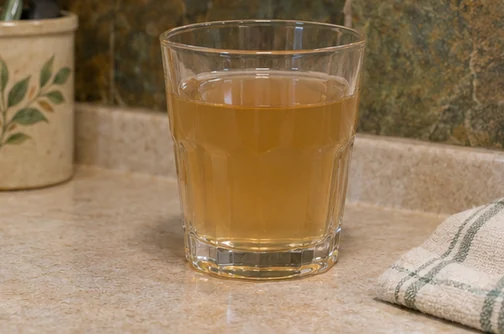
Short answer: Brown water is usually iron stirred up in the city main, or rust from your pipes or water heater. Compare hot and cold, check every faucet, run the cold water without using hot, and test a well. If cold water stays brown, call your water utility; if only hot stays rusty, call a plumber.
Check the warning signs below first.
Use this guide at your own risk. It’s general information, not professional advice. By using it, you agree to our Terms of Use and Safety Waiver.
Check for danger first
If any of these are present, stop here.
- Gas odor, smoke or fire. Leave immediately. From outside, call emergency services. For a gas odor, also call the gas utility. Leave lights and switches alone.
- Burning smell, scorch marks, a hot outlet or a buzzing panel. Stop and call an electrician. Stay clear of a suspect panel.
- Water near electrical equipment or exposed wiring. Keep away. Never cross water to reach a plug or breaker. Call a qualified electrician.
None of these warning signs? Open the checks
What to check
Have ready. A clear glass, a list of which faucets are brown, and the phone number of your water utility.
Compare hot and cold.
Fill a clear glass from the hot tap, then from the cold. If only the hot water is brown, the cause is likely your water heater or the pipes after it.
Check every faucet, including a toilet tank.
If only some faucets are brown, the cause is probably the plumbing at those spots. If every faucet is brown, the water coming into the house is likely discolored, often after a main break, hydrant flushing or firefighting nearby.
Run the cold water and skip the hot.
Run a cold faucet at the lowest point in the house for 5 to 10 minutes. If it’s still brown, wait about an hour and try again. Don’t use hot water, so brown water isn’t pulled into the water heater, and hold off on laundry so it doesn’t stain.
On a well, get the water tested.
If you have a private well and the color, taste or smell changes, test it at a state-certified lab. Your local health department can tell you what to test for, such as iron and manganese.
When to stop. If cold water is still brown after flushing, or it lasts more than a few hours, stop and call your water utility. If only hot water stays rusty, call a plumber or water heater pro. Don’t drink it or cook with it until it runs clear.
What it costs
- The checks above: free.
- Pro water heater flush: $100–$250. Anode rod replacement: $125–$300.
- Professional well water testing: $100–$500.
National US ranges from 2025–2026 cost guides: Fixr · This Old House. Prices in your area may differ.
Common causes
- Iron stirred up in the city main. Main breaks, hydrant flushing, firefighting and high demand stir up iron and manganese that settle in water mains. You can check
- Rust in your own pipes. Older plumbing often releases color after a tap has sat unused, and it clears quickly. You can check
- Rusting water heater. Rusty water that shows up first in hot water usually means the anode rod is used up or the tank lining is damaged. Call a pro
- Iron or manganese in well water. These cause rusty or brown color and staining, so a changed color calls for a lab test. Call a pro
Sources: Aquarion Water · Lennox · CDC · EPA.
Further reading · Portland Water Bureau
Still stuck? Get help with your exact problem.
Snap a photo and tell the app what you’ve tried. It walks you through your model, one safe step at a time, and tells you when to call a pro. Your first fix in the app is free.
The app is coming soon. Get one email the day it launches.
One email when the app launches. No spam. Privacy Policy