
Water heater pilot light won’t stay lit
Rule out gas and fire hazards, find drafts or blocked air, and know when a worn part means calling a pro.
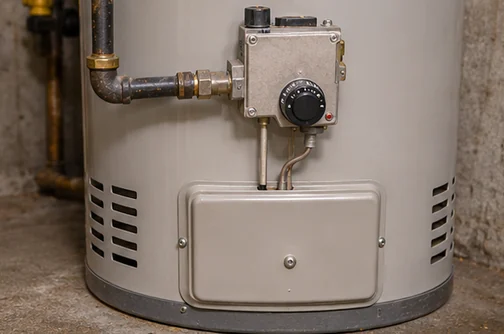
Short answer: A draft, blocked air or a worn thermocouple are common reasons a pilot keeps going out. Check for gas smell first, clear flammables and clutter, stop drafts, and relight only by the heater’s label. If it goes out again, a licensed plumber or gas technician needs to check the thermocouple, gas valve or gas supply.
Check the warning signs below first.
Use this guide at your own risk. It’s general information, not professional advice. By using it, you agree to our Terms of Use and Safety Waiver.
Check for danger first
If any of these are present, stop here.
- Gas odor, smoke or fire. Leave immediately. From outside, call emergency services. For a gas odor, also call the gas utility. Leave lights and switches alone.
- Burning smell, scorch marks, a hot outlet or a buzzing panel. Stop and call an electrician. Stay clear of a suspect panel.
- Water near electrical equipment or exposed wiring. Keep away. Never cross water to reach a plug or breaker. Call a qualified electrician.
None of these warning signs? Open the checks
What to check
Have ready. A flashlight, the lighting instructions label on the heater, and its brand and model number.
Check for gas smell first.
Natural gas has an added rotten-egg or sulfur smell. If you smell it, don’t relight anything or touch switches. Leave and call the gas utility or 911 from outside.
Clear the area around the heater.
Keep gasoline, paint thinner and other flammable liquids away from the heater; their vapors can ignite. Boxes or storage packed around it can starve the pilot of air. If the heater sits in a tight closet with little air, have a technician check it before relighting.
Look for drafts.
An open door or window nearby, such as in a garage or utility room, can blow out the small pilot flame. Close it and keep the area calm.
Relight only by the label.
Follow the lighting instructions on the heater’s label or in its manual, step by step, including the wait time. They come before any other guide. If your heater lights itself electronically, or you’re not comfortable, call a pro.
When to stop. If the pilot goes out again after you follow the label, or you smell gas at any point, stop. A thermocouple, gas control valve or gas supply problem needs a licensed plumber or gas technician. If a carbon monoxide alarm sounds, get everyone outside and call 911.
What it costs
- The checks above: free.
- Water heater pilot light repair: $75–$175.
- Thermocouple replacement: $150–$325; one estimate to clean and repair a thermocouple is $395.
National US ranges from 2025–2026 cost guides: Fixr · Thumbtack. Prices in your area may differ.
Common causes
- A draft. An open door or window near the heater can blow out the small pilot flame. You can check
- Not enough air. A tight closet or storage packed around the heater can starve the flame and release carbon monoxide, so a tech should fix the airflow. Call a pro
- Worn thermocouple or thermopile. This safety part sits in the flame; when it fails, the gas valve won’t keep the pilot lit after you let go of the knob. Call a pro
- Gas supply or pressure problem. A kinked or clogged gas tube, or gas pressure changes, keep the pilot from getting enough gas. Call a pro
- Failed gas control valve. The control valve can wear out over time and usually has to be replaced on a service visit. Call a pro
- Flammable vapors near the heater. Vapors from gasoline or other flammable liquids can ignite, and some heaters shut off gas and air when they sense them. Call a pro
Sources: A. O. Smith · Rheem: What is FVIR? · Thumbtack.
Further reading · A. O. Smith
Still stuck? Get help with your exact problem.
Snap a photo and tell the app what you’ve tried. It walks you through your model, one safe step at a time, and tells you when to call a pro. Your first fix in the app is free.
The app is coming soon. Get one email the day it launches.
One email when the app launches. No spam. Privacy Policy