
Carbon monoxide alarm beeping
Tell a carbon monoxide emergency apart from a low battery or an alarm that has reached the end of its life.
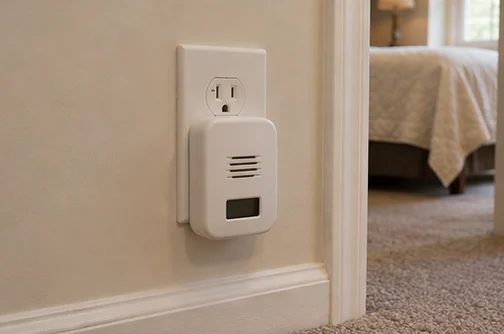
Short answer: Four beeps and a pause means carbon monoxide: get everyone outside, call 911 and don’t go back in until responders say so. One chirp a minute means low batteries, and a chirp every 30 seconds or 5 beeps a minute means the alarm is at the end of its life and must be replaced. If it goes off again after you return, have a qualified technician inspect your fuel-burning appliances.
Check the warning signs below first.
Use this guide at your own risk. It’s general information, not professional advice. By using it, you agree to our Terms of Use and Safety Waiver.
Check for danger first
If any of these are present, stop here.
- Gas odor, smoke or fire. Leave immediately. From outside, call emergency services. For a gas odor, also call the gas utility. Leave lights and switches alone.
- Burning smell, scorch marks, a hot outlet or a buzzing panel. Stop and call an electrician. Stay clear of a suspect panel.
- Water near electrical equipment or exposed wiring. Keep away. Never cross water to reach a plug or breaker. Call a qualified electrician.
None of these warning signs? Open the checks
What to check
Have ready. Your phone, fresh batteries of the type on the alarm’s label, and the alarm’s brand, model and date from the back.
Listen for 4 beeps and a pause first.
Four short beeps, a pause, then four more means the alarm has sensed carbon monoxide. Get everyone outside to fresh air now, call 911 from outside and count heads. Don’t look for the source, and don’t go back in until responders say it’s safe. If you can’t tell the pattern, treat it as carbon monoxide.
One chirp a minute means low batteries.
On Kidde and First Alert alarms, a single chirp about once a minute means the batteries are low. Replace them with the type on the label and press TEST. Some digital models show Lb on the screen.
A chirp every 30 seconds or 5 beeps a minute means replace it.
Kidde alarms chirp every 30 seconds at end of life, 7 or 10 years after first power-up depending on the model. First Alert alarms beep 5 times a minute. New batteries won’t stop it, and the alarm may no longer sense carbon monoxide. Replace the whole alarm right away.
Check the plug and the screen.
A long, steady squeal from a plug-in alarm can mean it’s unplugged or loose in the outlet. If the screen shows ERR, or a newer alarm chirps every 30 seconds, look up the signal in the manual or call the maker’s support line.
When to stop. If the alarm sounds again within 24 hours after you go back in, get everyone out again and have a qualified technician inspect every fuel-burning appliance. Don’t use an appliance you suspect until it’s been serviced. Anyone with a headache, dizziness, nausea or confusion needs fresh air and a 911 call right away.
What it costs
- The checks above: free.
- HVAC technician to inspect a furnace: $73–$132.
- Whole-system HVAC inspection: $70–$500, often $237–$430.
National US ranges from 2025–2026 cost guides: Fixr · Carrier. Prices in your area may differ.
Common causes
- Carbon monoxide in the home. A fuel-burning appliance that isn’t working right can be the source, so leave, call 911 and let responders and a technician find it. Call a pro
- Low batteries. A single chirp about once a minute means the batteries need replacing. You can check
- End of life. The sensor wears out, so the alarm chirps every 30 seconds or beeps 5 times a minute, and new batteries won’t fix it. You can check
- Unplugged or loose. A long, continuous squeal can mean a plug-in alarm has come loose from the outlet. You can check
- Alarm malfunction. A chirp every 30 seconds on a newer alarm, or ERR on the screen, can mean a fault, and the maker’s support line can tell you what to do. Call a pro
Sources: Kidde · First Alert · CPSC.
Further reading · CPSC
Still stuck? Get help with your exact problem.
Snap a photo and tell the app what you’ve tried. It walks you through your model, one safe step at a time, and tells you when to call a pro. Your first fix in the app is free.
The app is coming soon. Get one email the day it launches.
One email when the app launches. No spam. Privacy Policy