
Portable generator won’t start
Check the fuel, valve, switch, choke and oil that stop most portable generators from starting, with the generator safely outside.
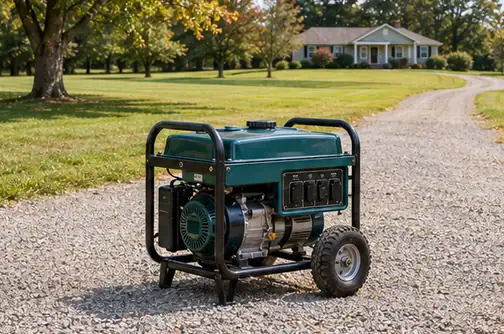
Short answer: Most no-starts come from low or stale fuel, a closed fuel valve or switch, the wrong choke setting or low oil. Move it outdoors, at least 20 feet from the house, then check those four things. If it still won’t start, take it to a small-engine shop or authorized dealer.
Check the warning signs below first.
Use this guide at your own risk. It’s general information, not professional advice. By using it, you agree to our Terms of Use and Safety Waiver.
Check for danger first
If any of these are present, stop here.
- Gas odor, smoke or fire. Leave immediately. From outside, call emergency services. For a gas odor, also call the gas utility. Leave lights and switches alone.
- Burning smell, scorch marks, a hot outlet or a buzzing panel. Stop and call an electrician. Stay clear of a suspect panel.
- Water near electrical equipment or exposed wiring. Keep away. Never cross water to reach a plug or breaker. Call a qualified electrician.
None of these warning signs? Open the checks
What to check
Have ready. The owner’s manual, fresh unleaded gas in an approved can, a flashlight and a level spot outdoors at least 20 feet from the house.
Move it outside first.
Only start or run a generator outdoors, at least 20 feet from windows, doors and attached garages. Never run it in a garage, basement or shed, even with the door open. Unplug every cord from it before you try to start it.
Check the fuel.
Keep at least a quarter tank of fresh unleaded gas. Gas that sat more than 30 days without stabilizer can gum up the carburetor. Add fuel only with the engine off and cool, because gas spilled on hot parts can ignite.
Set the fuel valve, switch and choke.
Turn the fuel valve and engine switch to ON, as your manual shows. Use full choke on a cold engine and half or no choke on a warm one. Check that the spark plug boot is pushed on until it clicks; replace the plug only if your manual shows how.
Check the oil on level ground.
Set the generator on a flat, level spot and read the dipstick. Many generators have a low-oil shutdown that protects the engine. If it’s low, add the oil your manual names.
When to stop. If it still won’t start, the fuel is stale or you smell leaking gas, stop and take it to a small-engine shop or the maker’s authorized dealer. Never plug a generator into a wall outlet to power the house. If anyone feels sick, dizzy or weak, get to fresh air right away. If a CO alarm sounds, get everyone outside and call 911.
What it costs
- The checks above: free.
- Generator repair: most homeowners pay $200–$600, and a service call alone is often $45–$100.
- Common fix: a carburetor cleaning at a small-engine shop, $80–$150.
National US ranges from 2025–2026 cost guides: Modernize · Small Engine Directory. Prices in your area may differ.
Common causes
- Low or stale fuel. The engine needs at least a quarter tank of fresh gas, and old gas can keep it from starting. You can check
- Fuel valve or engine switch off. Fuel can’t reach the engine with the valve closed, and the engine won’t run with the switch off. You can check
- Wrong choke setting. A cold engine needs full choke and a warm one needs half or no choke. You can check
- Low oil. Many generators have a low-oil shutdown that protects the engine when the oil is low. You can check
- Gummed-up carburetor. Fuel left too long without stabilizer can leave deposits that need a carburetor cleaning at a shop. Call a pro
Sources: Generac · Generac shutdowns · CPSC.
Further reading · Generac
Still stuck? Get help with your exact problem.
Snap a photo and tell the app what you’ve tried. It walks you through your model, one safe step at a time, and tells you when to call a pro. Your first fix in the app is free.
The app is coming soon. Get one email the day it launches.
One email when the app launches. No spam. Privacy Policy