
Smoke alarm going off for no reason
Rule out a real fire, then check for steam or cooking smoke, find the alarm that started it, clean it and check its age.
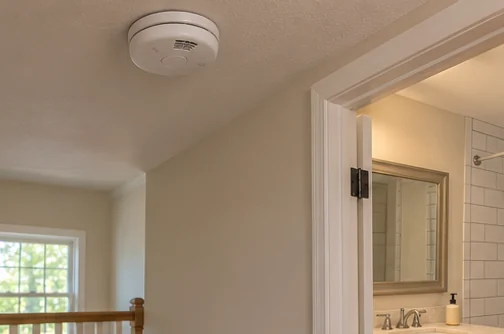
Short answer: Most false alarms come from cooking smoke or steam, dust or bugs in the sensor, or an alarm past its life. Rule out fire first, ventilate and press hush, find the alarm that started it, clean it and check its date. If it keeps going off, replace it, with a licensed electrician for hardwired alarms, and never leave it disabled.
Check the warning signs below first.
Use this guide at your own risk. It’s general information, not professional advice. By using it, you agree to our Terms of Use and Safety Waiver.
Check for danger first
If any of these are present, stop here.
- Gas odor, smoke or fire. Leave immediately. From outside, call emergency services. For a gas odor, also call the gas utility. Leave lights and switches alone.
- Burning smell, scorch marks, a hot outlet or a buzzing panel. Stop and call an electrician. Stay clear of a suspect panel.
- Water near electrical equipment or exposed wiring. Keep away. Never cross water to reach a plug or breaker. Call a qualified electrician.
None of these warning signs? Open the checks
What to check
Have ready. A step stool, a vacuum with a soft brush attachment, and the alarm’s brand and the date on its back.
Check for fire first.
Treat every alarm as real until you know it isn’t. If you see or smell smoke or fire, get everyone outside and call 911 from outside. You may have less than 2 minutes to get out.
Clear steam or cooking smoke.
If it went off while you were cooking or showering, open a window or door and press the hush button. Hush lowers the alarm’s sensitivity for a few minutes. Never take out the battery or disconnect the alarm to quiet it.
Find the alarm that started it.
When alarms are linked, they all sound together. On many models the alarm that started it flashes its light about once a second, and hushing that one quiets the rest. Light patterns vary by brand.
Clean it and check its age.
Gently vacuum the vents with a soft brush, or use short bursts of compressed air. Don’t use water or sprays. Replace alarms every 10 years, or sooner if the maker says so, and replace any alarm with no date. A chirp every 30 to 60 seconds means a low battery, not a false alarm.
When to stop. If it keeps going off after cleaning, it’s past its date, or it sits close to a kitchen or bathroom, replace or move it. A hardwired alarm is a job for a licensed electrician. Never leave an alarm disabled. If there is any smoke or fire, get out and call 911.
What it costs
- The checks above: free.
- Pro smoke detector installation: $70–$150, about $112 for a hardwired detector.
- Electricians charge about $40–$120 an hour, and small jobs often have a minimum charge.
National US ranges from 2025–2026 cost guides: Fixr · This Old House. Prices in your area may differ.
Common causes
- Cooking smoke or shower steam. Smoke and steam from nearby cooking or a hot shower can set off an alarm. You can check
- Dust or bugs in the sensor. Buildup in the sensing chamber can cause nuisance alarms, and cleaning helps prevent them. You can check
- Humidity or other conditions. High humidity and other conditions near the alarm can trigger it. You can check
- Alarm past its life. Smoke alarms don’t last forever and should be replaced every 10 years, or sooner for some models. You can check
- Power interruptions on a hardwired alarm. Interruptions in the power to the unit can cause it to sound. Call a pro
- Hardwired alarm in the wrong spot. An alarm too close to a kitchen or bathroom may need moving, which means wiring work. Call a pro
Sources: Kidde · Kidde cleaning · Kidde false alarms · U.S. Fire Administration.
Further reading · U.S. Fire Administration
Still stuck? Get help with your exact problem.
Snap a photo and tell the app what you’ve tried. It walks you through your model, one safe step at a time, and tells you when to call a pro. Your first fix in the app is free.
The app is coming soon. Get one email the day it launches.
One email when the app launches. No spam. Privacy Policy