
Smoke detector chirping
Tell whether the chirp means a low battery, a dirty alarm or an alarm at the end of its life, and find which one is doing it.
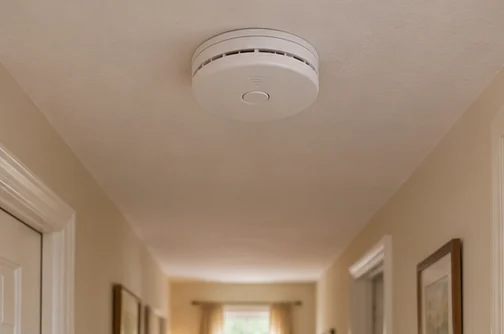
Short answer: A chirp usually means a low battery or an alarm that is 10 years old and at the end of its life. Find which alarm it is, replace the battery and test it, then check the date and clean the openings. If a hardwired alarm still chirps with a new battery, call a licensed electrician.
Check the warning signs below first.
Use this guide at your own risk. It’s general information, not professional advice. By using it, you agree to our Terms of Use and Safety Waiver.
Check for danger first
If any of these are present, stop here.
- Gas odor, smoke or fire. Leave immediately. From outside, call emergency services. For a gas odor, also call the gas utility. Leave lights and switches alone.
- Burning smell, scorch marks, a hot outlet or a buzzing panel. Stop and call an electrician. Stay clear of a suspect panel.
- Water near electrical equipment or exposed wiring. Keep away. Never cross water to reach a plug or breaker. Call a qualified electrician.
None of these warning signs? Open the checks
What to check
Have ready. A sturdy step ladder, a helper, the right fresh battery for the alarm (check its label) and a vacuum with a soft brush attachment.
Make sure it’s a chirp, not an alarm.
A single short chirp every 30 to 60 seconds is a warning signal. A loud, repeating alarm means smoke or fire: get everyone out and call 911 from outside. Don’t troubleshoot a full alarm.
Find which alarm is chirping.
Stand under each alarm and listen, and look for a blinking light. Read the model and the manufacture date on the back label. Low-battery chirps often start at night, when the house is coolest.
Replace the battery, then test.
Put in a fresh battery of the type on the label and close the battery door all the way. Many alarms keep chirping if it isn’t fully shut. Hardwired alarms have a backup battery too: follow the manual to reach it and don’t disconnect or touch the house wiring. Press TEST.
Check its age, then clean it.
Replace any smoke alarm that is 10 years old, including hardwired and sealed 10-year models. A new battery won’t stop an end-of-life chirp. If it’s newer, gently vacuum the openings with a soft brush. Don’t spray cleaners or paint on it.
When to stop. Never leave an alarm down or without a working battery. If a hardwired alarm still chirps with a new battery, or needs replacing, stop and call a licensed electrician. Replacing a hardwired alarm means working on the wiring.
What it costs
- The checks above: free.
- Electrician to replace a hardwired smoke alarm: $70–$150, often about $112.
- Electricians charge about $30–$100 an hour, and one alarm takes about an hour.
National US ranges from 2025–2026 cost guides: Fixr · Angi. Prices in your area may differ.
Common causes
- Low battery. Most alarms chirp every 30 to 60 seconds when the battery is low, and a cold house at night can set it off early. You can check
- Battery door not fully closed. Many alarms keep chirping, even with a new battery, until the battery drawer is shut all the way. You can check
- End of life. Smoke alarms should be replaced every 10 years, and a new battery won’t stop an end-of-life chirp. You can check
- Dust in the openings. First Alert lists gently vacuuming the openings with a soft brush as part of fixing a chirping alarm. You can check
- Power problem on a hardwired alarm. A loose power connector or a power interruption can make a hardwired alarm chirp, and that’s wiring work. Call a pro
- Alarm malfunction. A chirp between flashes of the red light, or no sound when you hold TEST, can mean the alarm has failed. Call a pro
Sources: Kidde · Kidde night chirps · First Alert · U.S. Fire Administration.
Further reading · U.S. Fire Administration
Still stuck? Get help with your exact problem.
Snap a photo and tell the app what you’ve tried. It walks you through your model, one safe step at a time, and tells you when to call a pro. Your first fix in the app is free.
The app is coming soon. Get one email the day it launches.
One email when the app launches. No spam. Privacy Policy