
Gas fireplace won’t light
Rule out batteries, the wall switch and power, and the gas shutoff, and know when the pilot or its parts need a technician.
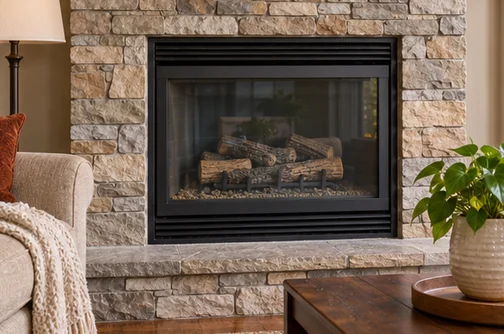
Short answer: Dead remote or receiver batteries, a wall switch or breaker, a closed gas shutoff or a pilot that is out are common reasons a gas fireplace won’t light. Replace the batteries, check the switch and power, make sure the gas is on (a closed valve is for the gas utility or a technician to reopen), and relight a standing pilot only by the label. If it still won’t light or stay lit, a qualified technician needs to check the thermocouple, thermopile, valve or wiring.
Check the warning signs below first.
Use this guide at your own risk. It’s general information, not professional advice. By using it, you agree to our Terms of Use and Safety Waiver.
Check for danger first
If any of these are present, stop here.
- Gas odor, smoke or fire. Leave immediately. From outside, call emergency services. For a gas odor, also call the gas utility. Leave lights and switches alone.
- Burning smell, scorch marks, a hot outlet or a buzzing panel. Stop and call an electrician. Stay clear of a suspect panel.
- Water near electrical equipment or exposed wiring. Keep away. Never cross water to reach a plug or breaker. Call a qualified electrician.
None of these warning signs? Open the checks
What to check
Have ready. Fresh batteries for the remote and receiver, a flashlight, and the fireplace’s manual and lighting instructions label.
Replace the remote and receiver batteries.
Many remote systems have batteries in the remote and in a receiver near the fireplace controls, and low receiver batteries can keep it from lighting. Turn the fireplace off and let it cool first: the glass can stay hot for up to an hour after the flame is off.
Check the wall switch and power.
If you use a remote, make sure the wall switch plate is set to remote, then try the wall switch itself. Check the home’s breakers and any backup batteries behind the wall plate.
Make sure the gas is on.
Check that other gas appliances, like the stove or water heater, still work. If the gas to the house is off, or someone closed the fireplace’s own gas shutoff, don’t open it yourself: call the gas utility or a gas fireplace technician to turn it back on and check it.
Relight the pilot only by the label.
If your fireplace has a standing pilot that is out, follow the lighting instructions on the appliance label or in the manual, step by step. If it lights electronically and still won’t start, call a technician.
When to stop. If you smell gas, leave right away and call the gas utility from outside. If a carbon monoxide alarm sounds, get everyone outside and call 911. If the pilot won’t stay lit or the burner won’t light after these checks, call a qualified gas fireplace technician. The thermocouple, thermopile, gas valve and wiring are jobs for a pro. Have the fireplace inspected every year.
What it costs
- The checks above: free.
- Pro gas fireplace repair: $200–$1,000, about $600 on average.
- Common fix: a new thermocouple, $75–$150.
- Yearly fireplace maintenance visit: about $150.
National US ranges from 2025–2026 cost guides: Fixr · Thumbtack. Prices in your area may differ.
Common causes
- Dead remote or receiver batteries. Both the remote and the receiver need power, and low receiver batteries are a common reason a fireplace won’t light. You can check
- Wall switch setting or a tripped breaker. A wall plate not set to remote, a tripped breaker or dead backup batteries keep the fireplace from getting the signal to start. You can check
- Gas not reaching the fireplace. A closed shutoff, a gas supply problem or air in the gas line stops the burner; purging a line is a technician’s job. Call a pro
- Worn thermocouple or thermopile. If the pilot flame doesn’t heat this safety sensor properly, the gas valve won’t stay open. Call a pro
- Loose wiring, a bad valve or ignition module. Loose wires to the valve or module, or a failed part, keep the burner from lighting; valve troubleshooting is for a qualified technician. Call a pro
- Blocked vent. An obstructed vent can make the burner light and then go out, and needs a service technician. Call a pro
Sources: Lennox Hearth (owner’s manual) · Valor · Fixr · American Academy of Pediatrics · CPSC.
Further reading · Lennox Hearth (owner’s manual)
Still stuck? Get help with your exact problem.
Snap a photo and tell the app what you’ve tried. It walks you through your model, one safe step at a time, and tells you when to call a pro. Your first fix in the app is free.
The app is coming soon. Get one email the day it launches.
One email when the app launches. No spam. Privacy Policy