
Dishwasher not cleaning dishes
Find out whether cool water, a clogged filter, blocked spray arms or the way it’s loaded is leaving food on your dishes.
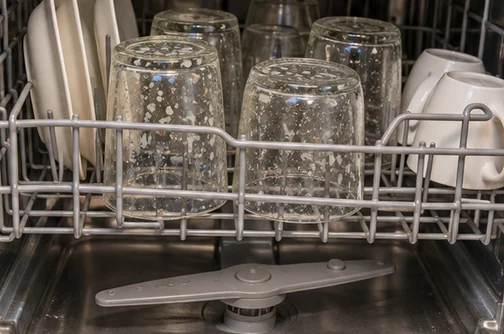
Short answer: Most often the water is too cool, the filter is clogged, or the spray arms are blocked. Run the sink until it’s hot, clean the filter, clear the spray arms and load so nothing blocks them. If dishes are still dirty or it doesn’t heat, call an appliance repair technician.
Check the warning signs below first.
Use this guide at your own risk. It’s general information, not professional advice. By using it, you agree to our Terms of Use and Safety Waiver.
Check for danger first
If any of these are present, stop here.
- Gas odor, smoke or fire. Leave immediately. From outside, call emergency services. For a gas odor, also call the gas utility. Leave lights and switches alone.
- Burning smell, scorch marks, a hot outlet or a buzzing panel. Stop and call an electrician. Stay clear of a suspect panel.
- Water near electrical equipment or exposed wiring. Keep away. Never cross water to reach a plug or breaker. Call a qualified electrician.
None of these warning signs? Open the checks
What to check
Have ready. A kitchen thermometer, a glass, a soft brush, a paper clip or tweezers, and the owner’s manual.
Run the hot water at the sink first.
The water going into the dishwasher should be at least 120°F. Run the kitchen tap until it’s hot before you start a cycle, and check it with a thermometer in a glass. If it never reaches 120°F, the water heater may need adjusting.
Clean the filter.
Food can clog the filter and leave grit on dishes. If your model has a removable filter, take it out as the manual shows, rinse it under warm water and brush it gently. GE suggests doing this once a month.
Clear the spray arms.
Spin each spray arm by hand. It should turn freely. Clear blocked holes with a paper clip or tweezers without damaging them. Take the arms off only if your manual shows how.
Fix the loading and the detergent.
Scrape food off first, and keep tall items and pans from blocking the spray arms and the tower. Use fresh dishwasher detergent, never dish soap, and keep the rinse aid filled.
When to stop. If dishes are still dirty with hot water and a clean filter, the spray arms won’t turn, or the dishwasher doesn’t heat, stop and call an appliance repair technician. Those parts are behind the panels.
What it costs
- The checks above: free.
- Pro dishwasher repair: $100–$300.
- Common fixes: a new filter, $50–$125; a new spray arm, $75–$150.
- Many techs charge a $50–$75 diagnostic fee.
National US ranges from 2025–2026 cost guides: Fixr · This Old House. Prices in your area may differ.
Common causes
- Water not hot enough. Water under 120°F doesn’t activate the detergent well, so food and grease stay on. You can check
- Clogged filter. Food caught in the filter cuts the water flow and can leave grit on dishes. You can check
- Blocked spray arm holes. Food or mineral deposits in the holes stop water from reaching every dish. You can check
- Loading that blocks the spray. Tall items or pans in the way stop the spray arms or the tower from reaching the dishes. You can check
- Wrong or old detergent. Dish soap isn’t made for dishwashers, and old, lumpy detergent may not dissolve. You can check
- Installation or water supply problem. A dishwasher hooked to the cold line, out of level or with a drain hose set too high cleans poorly. Call a pro
Sources: GE Appliances · GE Appliances wash tips.
Further reading · GE Appliances
Still stuck? Get help with your exact problem.
Snap a photo and tell the app what you’ve tried. It walks you through your model, one safe step at a time, and tells you when to call a pro. Your first fix in the app is free.
The app is coming soon. Get one email the day it launches.
One email when the app launches. No spam. Privacy Policy