
Dishwasher making noise
Tell normal dishwasher sounds from a problem, then check the load, the spray arms and the filter.
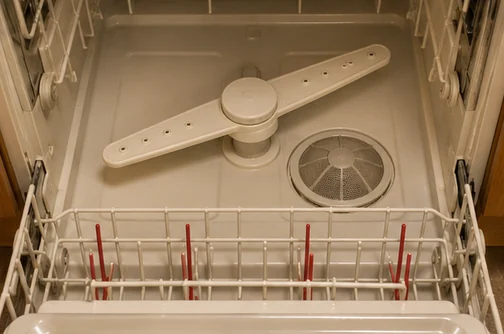
Short answer: Swishing, humming and clicks are normal; knocking usually means a spray arm is hitting a dish, and grinding can mean debris in the pump area. Rearrange the load, turn off the breaker to check the filter and sump, and run it empty. If loud noise continues, call an appliance technician.
Check the warning signs below first.
Use this guide at your own risk. It’s general information, not professional advice. By using it, you agree to our Terms of Use and Safety Waiver.
Check for danger first
If any of these are present, stop here.
- Gas odor, smoke or fire. Leave immediately. From outside, call emergency services. For a gas odor, also call the gas utility. Leave lights and switches alone.
- Burning smell, scorch marks, a hot outlet or a buzzing panel. Stop and call an electrician. Stay clear of a suspect panel.
- Water near electrical equipment or exposed wiring. Keep away. Never cross water to reach a plug or breaker. Call a qualified electrician.
None of these warning signs? Open the checks
What to check
Have ready. A flashlight, gloves, a soft brush and your dishwasher’s manual.
Know the normal sounds.
Rushing and swishing water, humming from the drain pump or fan, and clicks and snaps from the valve and detergent cup are normal. Grinding with no water in the tub, or loud grinding or buzzing every cycle, is not.
Look for something hitting the spray arms.
Rhythmic knocking or thumping often means a spray arm is hitting a dish. Rearrange the load so the arms spin freely and nothing hangs below the rack. Secure light plastic items and keep dishes from touching.
Turn off the power, then check the filter and sump.
Wait for the cycle to end. Turn off the dishwasher’s breaker; don’t rely on the control panel alone. Wear gloves, remove the filter as your manual shows and shine a flashlight into the sump. Carefully remove glass, seeds or labels; debris can be sharp.
Run it empty.
Put the filter back and lock it in place, since it must never run without one. Turn the breaker on and run a cycle with no dishes. If the noise stops, it was the load.
When to stop. If loud grinding, squealing or buzzing continues after cleaning and during an empty cycle, turn off the breaker and call an appliance technician. A worn pump or motor is a technician’s job. Never reach into the dishwasher while it’s running.
What it costs
- The checks above: free.
- Pro dishwasher repair: $100–$300.
- Drain pump replacement: $150–$400. Motor repair: $200–$500.
National US ranges from 2025–2026 cost guides: Fixr · This Old House. Prices in your area may differ.
Common causes
- Normal operating sounds. Water spraying, the drain pump humming and the detergent cup snapping open are part of a normal cycle. You can check
- A spray arm hitting dishes. Rhythmic knocking means an arm is striking an item that hangs below the rack. You can check
- Loose dishes or a loose filter. Light plastic items, touching dishes or a filter that isn’t locked in can rattle. You can check
- Debris in the sump or pump. Glass or other hard debris near the pump causes grinding, buzzing or loud humming. You can check
- Worn pump or motor. Grinding or squealing that continues with the filter clean and the dishwasher empty points to the pump or motor. Call a pro
Sources: GE Appliances · Whirlpool · Whirlpool: not draining · Samsung.
Further reading · GE Appliances
Still stuck? Get help with your exact problem.
Snap a photo and tell the app what you’ve tried. It walks you through your model, one safe step at a time, and tells you when to call a pro. Your first fix in the app is free.
The app is coming soon. Get one email the day it launches.
One email when the app launches. No spam. Privacy Policy