
Dishwasher leaking
Tell whether suds, the door seal, loading, a clogged filter or a part inside is letting water out.
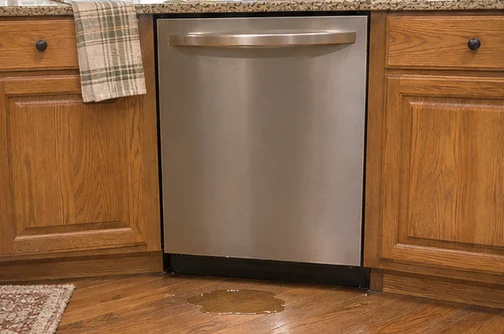
Short answer: Most leaks come from suds made by the wrong detergent, a dirty or torn door seal, dishes blocking the door, or a clogged filter. Turn off the power and water, then check those and the level. If water comes from under the middle or back, call an appliance repair technician.
Check the warning signs below first.
Use this guide at your own risk. It’s general information, not professional advice. By using it, you agree to our Terms of Use and Safety Waiver.
Check for danger first
If any of these are present, stop here.
- Gas odor, smoke or fire. Leave immediately. From outside, call emergency services. For a gas odor, also call the gas utility. Leave lights and switches alone.
- Burning smell, scorch marks, a hot outlet or a buzzing panel. Stop and call an electrician. Stay clear of a suspect panel.
- Water near electrical equipment or exposed wiring. Keep away. Never cross water to reach a plug or breaker. Call a qualified electrician.
None of these warning signs? Open the checks
What to check
Have ready. Towels, a flashlight, a small level and the owner’s manual.
Turn off the power and water first.
Switch off the dishwasher’s breaker and close its water valve under the sink before you wipe up or look underneath. Soak up the water with towels. Don’t run the dishwasher until you find the leak.
Check the detergent.
Use only automatic dishwasher detergent, never dish soap. Too much or the wrong kind makes suds that push water out the door. Wipe up spilled rinse aid, and rinse off dish-soap residue if you prewash.
Check the door and the seal.
Make sure no dish or utensil sticks out and keeps the door from closing. Look at the rubber seal for tears, cuts or food stuck on it and wipe it clean. A gap of a few inches at the bottom of the seal is normal.
Clean the filter and check the level.
A clogged filter can make water back up. Take out the filter as the manual shows and rinse it. Then set a level across the front of the tub, side to side and front to back. If it’s off, the feet need adjusting by an installer or technician.
When to stop. If water comes from under the middle or back, the seal is torn, the tub overfills, or it still leaks after these checks, stop and call an appliance repair technician. The valve, pump and hoses are behind the panels.
What it costs
- The checks above: free.
- Pro dishwasher leak repair: $50–$300.
- Common fix: a new door gasket, $50–$150.
- Most dishwasher repairs run $117–$300, often about $187.
National US ranges from 2025–2026 cost guides: Fixr · Thumbtack. Prices in your area may differ.
Common causes
- Suds from the wrong detergent. Dish soap, too much detergent or spilled rinse aid makes suds that push water out the door. You can check
- Dishes keeping the door from sealing. A utensil or dish sticking out stops the door from closing tight against the seal. You can check
- Dirty or worn door seal. Food, tears or flat spots on the rubber seal let water past it. You can check
- Clogged filter. A blocked filter can make water back up in the tub and leak. You can check
- Dishwasher not level. If it tilts, water can spill over the tub edge and out under the door. Call a pro
- Inlet valve, pump or hose leak. A sticking valve overfills the tub, and worn pump seals or cracked hoses leak under the middle or back. Call a pro
Sources: Whirlpool · GE Appliances.
Further reading · Whirlpool
Still stuck? Get help with your exact problem.
Snap a photo and tell the app what you’ve tried. It walks you through your model, one safe step at a time, and tells you when to call a pro. Your first fix in the app is free.
The app is coming soon. Get one email the day it launches.
One email when the app launches. No spam. Privacy Policy