
Water leaking under the sink
Find whether the water comes from the supply lines and valves, the faucet hoses, the drain pipes or the disposal, and stop it.
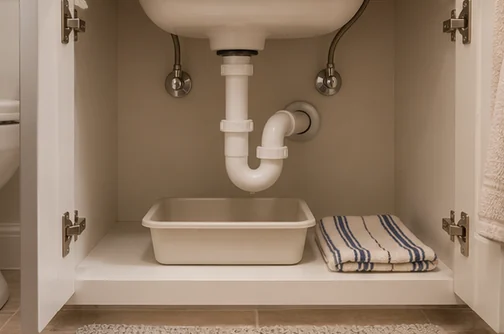
Short answer: Most leaks under a sink come from a supply line or shutoff valve, the faucet hoses, a loose drain nut or the disposal. Dry everything, see whether it leaks all the time or only when you use the sink, shut the valves for a supply leak and hand-snug drain nuts. If a valve, hose or the disposal leaks, call a plumber.
Check the warning signs below first.
Use this guide at your own risk. It’s general information, not professional advice. By using it, you agree to our Terms of Use and Safety Waiver.
Check for danger first
If any of these are present, stop here.
- Gas odor, smoke or fire. Leave immediately. From outside, call emergency services. For a gas odor, also call the gas utility. Leave lights and switches alone.
- Burning smell, scorch marks, a hot outlet or a buzzing panel. Stop and call an electrician. Stay clear of a suspect panel.
- Water near electrical equipment or exposed wiring. Keep away. Never cross water to reach a plug or breaker. Call a qualified electrician.
None of these warning signs? Open the checks
What to check
Have ready. A flashlight, dry paper towels, a bucket or shallow pan and old towels.
Make it safe, then dry everything.
If water has reached an outlet or a plugged-in disposal or dishwasher under the sink, turn off that breaker before you touch anything. Then empty the cabinet, put a bucket under the pipes and dry every pipe and joint.
Find when it leaks.
Moen splits it in two: water that leaks all the time, even with the faucet off, comes from the shutoff valves or supply lines. Water that shows up only after you use the sink comes from the faucet hoses or the drain. Hold a dry paper towel under each joint and watch for the first wet spot.
Shut the valves for a supply leak.
If a valve or supply line is dripping with the faucet off, turn both shutoff valves under the sink to off. If a valve itself leaks or won’t turn, don’t force it. Shut off the main water and call a plumber.
Snug the drain nuts by hand.
If a drain joint drips while water drains, tighten its plastic slip nut by hand. Don’t crank it with pliers, which can crack the fitting. Run water again and check with a dry towel.
When to stop. Stop and call a plumber if a valve, supply line or faucet hose leaks, a drain joint still drips after hand-tightening, the trap is cracked, the leak comes from the wall or the disposal itself, or the cabinet floor is soft or moldy.
What it costs
- The checks above: free.
- Plumber sink repair: $173–$432, most pay about $273.
- Leaking pipe repair: $150–$350.
- Replacing the pipes under a kitchen sink, trap included: $150–$325.
National US ranges from 2025–2026 cost guides: Thumbtack · Fixr. Prices in your area may differ.
Common causes
- Loose drain slip nut. Plastic drain joints loosen over time and drip while water drains; most can be tightened by hand. You can check
- Worn drain washer or cracked trap. A flattened or misplaced washer keeps leaking after tightening, and a cracked or corroded trap has to be replaced. Call a pro
- Leaking shutoff valve or supply line. A leak that drips all the time, even with the faucet off, comes from the valves or the lines that feed the faucet. Call a pro
- Faucet hose connections. A leak only after the faucet is used points to the hose connections under the sink, which vary by faucet model. Call a pro
- Disposal mount or drain outlet. A disposal can leak at its sink mount or at its drain outlet, and water from the top can run down and look like a leak lower down. Call a pro
Sources: Moen · HomeTips · Roto-Rooter · InSinkErator.
Further reading · Moen
Still stuck? Get help with your exact problem.
Snap a photo and tell the app what you’ve tried. It walks you through your model, one safe step at a time, and tells you when to call a pro. Your first fix in the app is free.
The app is coming soon. Get one email the day it launches.
One email when the app launches. No spam. Privacy Policy