
Sink stopper stuck
Check the linkage under the sink, pull and clean the stopper, and adjust it so it opens and closes without forcing it.
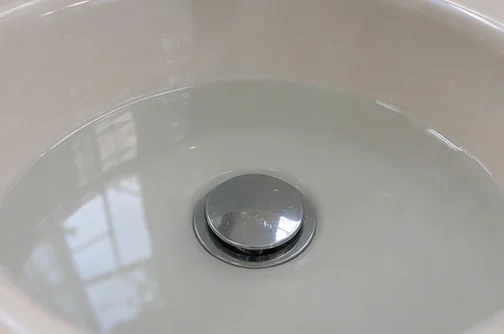
Short answer: A stuck pop-up stopper is usually clogged with hair and soap scum or its linkage is out of adjustment. Check the rod and clip under the sink, pull the stopper out, clean it, and move the rod to another hole on the strap. If parts are broken or corroded, or the nut leaks, call a plumber.
Check the warning signs below first.
Use this guide at your own risk. It’s general information, not professional advice. By using it, you agree to our Terms of Use and Safety Waiver.
Check for danger first
If any of these are present, stop here.
- Gas odor, smoke or fire. Leave immediately. From outside, call emergency services. For a gas odor, also call the gas utility. Leave lights and switches alone.
- Burning smell, scorch marks, a hot outlet or a buzzing panel. Stop and call an electrician. Stay clear of a suspect panel.
- Water near electrical equipment or exposed wiring. Keep away. Never cross water to reach a plug or breaker. Call a qualified electrician.
None of these warning signs? Open the checks
What to check
Have ready. A flashlight, a bucket or pan, an adjustable wrench, a rag, and an old toothbrush.
Look under the sink.
Clear the cabinet and set a bucket under the drain. Find the flat metal strap with holes (the clevis), the horizontal rod that goes into the drain pipe, and the spring clip that joins them. If the rod has slipped out of the clip, put it back.
Pull out the stopper.
Unscrew the nut where the rod enters the drain pipe by hand or with a wrench, pull the rod back, and lift the stopper out from above. Don’t pry or force it: if it won’t move, something inside is broken or jammed.
Clean it.
Wipe hair and soap scum off the stopper and rod. Remove any debris you can reach in the drain opening. Put the stopper back, slide the rod through its hole, and hand-tighten the nut. Don’t overtighten.
Adjust the lift.
Move the rod to a different hole on the strap until the stopper opens and closes fully. Pfister recommends at least 1/4 to 1/2 inch of lift when it’s open. Run water and check the nut for drips.
When to stop. If the rod or pivot is broken or corroded, the stopper won’t come out, the nut leaks after hand-tightening, or the sink still drains slowly, stop and call a plumber.
What it costs
- The checks above: free.
- Plumber sink repair: $173–$432, most people pay about $273.
- Plumber to clear a clogged drain: $150–$200 on Thumbtack; This Old House puts clog clearing at $100–$500.
National US ranges from 2025–2026 cost guides: Thumbtack · This Old House. Prices in your area may differ.
Common causes
- Hair and soap scum. Debris wraps around the stopper and rod and keeps it from moving or draining. You can check
- Linkage out of adjustment. If the rod sits in the wrong hole on the strap, the stopper won’t rise or close fully. You can check
- Broken or corroded pivot. When the linkage won’t move at all, the pivot inside the drain may have corroded or snapped. Call a pro
- Clog past the stopper. If the sink still drains slowly with a clean stopper, the clog is further down in the trap. Call a pro
Sources: Pfister · This Old House.
Further reading · Pfister
Still stuck? Get help with your exact problem.
Snap a photo and tell the app what you’ve tried. It walks you through your model, one safe step at a time, and tells you when to call a pro. Your first fix in the app is free.
The app is coming soon. Get one email the day it launches.
One email when the app launches. No spam. Privacy Policy