
Garbage disposal leaking
Find exactly where the water comes from: the sink flange, the dishwasher hose, the drain pipe or the bottom of the unit.
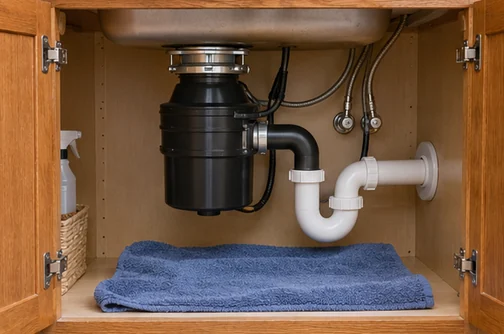
Short answer: Where it drips tells you the cause: a loose dishwasher hose clamp or drain connection on the side, a failed seal at the sink flange on top, or a failed internal seal at the bottom. Turn off the power, find the drip with dyed water and tighten a loose hose clamp. A leak at the top or bottom, or one that won’t stop, is a job for a plumber, and a bottom leak usually means a new disposal.
Check the warning signs below first.
Use this guide at your own risk. It’s general information, not professional advice. By using it, you agree to our Terms of Use and Safety Waiver.
Check for danger first
If any of these are present, stop here.
- Gas odor, smoke or fire. Leave immediately. From outside, call emergency services. For a gas odor, also call the gas utility. Leave lights and switches alone.
- Burning smell, scorch marks, a hot outlet or a buzzing panel. Stop and call an electrician. Stay clear of a suspect panel.
- Water near electrical equipment or exposed wiring. Keep away. Never cross water to reach a plug or breaker. Call a qualified electrician.
None of these warning signs? Open the checks
What to check
Have ready. A flashlight, paper towels or newspaper, a light-colored rag, food coloring, a bucket and a screwdriver.
Turn off the power first.
Turn the disposal’s wall switch off, then switch off its breaker, or unplug it if it plugs in under the sink. Never put your hand inside the disposal.
Find where it drips.
Empty the cabinet, dry the disposal and pipes, and lay paper under them. Plug the sink, add water with a few drops of food coloring, and wipe the top, sides and bottom of the unit with a light rag. Then pull the plug and check again as it drains.
Tighten the hose clamp if that’s the leak.
If it drips where the dishwasher drain hose meets the disposal, the clamp may be loose. Tighten its screw with a screwdriver. If it drips where the drain pipe joins the side, check that the connection is snug, but don’t force a cracked part.
Read the leak by where it is.
A leak at the top, at the sink flange, usually means the seal under the flange has failed or the mounting has loosened. A leak from the bottom of the unit usually means an internal seal failed or the body cracked, and the disposal needs to be replaced.
When to stop. Stop and call a plumber if it leaks from the top at the sink flange, from the bottom of the unit, from a cracked pipe or elbow, or keeps dripping after you tighten a clamp. Leave the power off until it’s fixed.
What it costs
- The checks above: free.
- Pro garbage disposal repair: $70–$400, often about $250.
- Replace a leaking disposal: $350–$700 to remove the old one and install a new one.
- Plumbers charge $75–$200 an hour.
National US ranges from 2025–2026 cost guides: This Old House · Fixr. Prices in your area may differ.
Common causes
- Loose dishwasher hose clamp. The clamp that holds the dishwasher drain hose on the disposal can work loose and drip. You can check
- Leak from somewhere else. Water filters, the sink sprayer, the faucet or the sink and counter seams can drip near the disposal. You can check
- Worn gasket or cracked elbow at the drain outlet. A torn gasket, loose discharge bolts or a cracked elbow let water out where the drain pipe joins the side. Call a pro
- Failed sink flange seal or loose mounting. Old plumber’s putty or loose mounting screws let water out at the top. Call a pro
- Internal seal failed. A leak from the bottom usually means a motor seal failed or the housing cracked, so the unit is replaced. Call a pro
Sources: InSinkErator dishwasher inlet · InSinkErator discharge · InSinkErator mounting · Bob Vila.
Further reading · InSinkErator
Still stuck? Get help with your exact problem.
Snap a photo and tell the app what you’ve tried. It walks you through your model, one safe step at a time, and tells you when to call a pro. Your first fix in the app is free.
The app is coming soon. Get one email the day it launches.
One email when the app launches. No spam. Privacy Policy