
Dishwasher pod not dissolving
Find out whether the pod is stuck, blocked in the dispenser or not getting enough hot water.
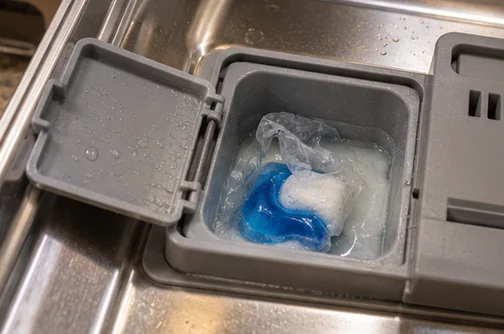
Short answer: Most pods that don’t dissolve are blocked by dishes, stuck from moisture or not getting enough hot water. Put the pod in the dispenser with dry hands, keep the cup clear, run hot water at the sink and check the spray arms. If the lid won’t open or little water comes in, call an appliance technician.
Check the warning signs below first.
Use this guide at your own risk. It’s general information, not professional advice. By using it, you agree to our Terms of Use and Safety Waiver.
Check for danger first
If any of these are present, stop here.
- Gas odor, smoke or fire. Leave immediately. From outside, call emergency services. For a gas odor, also call the gas utility. Leave lights and switches alone.
- Burning smell, scorch marks, a hot outlet or a buzzing panel. Stop and call an electrician. Stay clear of a suspect panel.
- Water near electrical equipment or exposed wiring. Keep away. Never cross water to reach a plug or breaker. Call a qualified electrician.
None of these warning signs? Open the checks
What to check
Have ready. Dry hands, a fresh pod, a mug and your dishwasher manual.
Put the pod in the dispenser with dry hands.
Place one pod in the detergent cup and close the lid, unless your detergent or dishwasher maker says otherwise. Wet hands or a wet cup can make the pod stick. Add it just before you start the cycle.
Keep the dispenser clear.
Tall dishes, cutting boards or pot handles in front of the cup can stop it from opening or keep water off the pod. Load so nothing blocks the cup, and make sure the pod isn’t jamming the lid.
Run hot water at the sink first.
Run the faucet closest to the dishwasher until the water is hot, then start the cycle. Cascade says the water should be at least 120°F.
Check the spray arms.
Make sure the spray arms turn freely and their holes aren’t clogged with food. To test water flow, set a mug open end up on the top rack and run a cycle. If it isn’t full of water afterward, not enough water is coming in.
When to stop. If the dispenser lid won’t open with nothing in its way, the latch looks broken, or the mug test shows little water, stop and call an appliance technician. Don’t take the door panel apart.
What it costs
- The checks above: free.
- Pro dishwasher repair: $100–$300.
- Common fix: a new detergent dispenser, $50–$80 installed.
National US ranges from 2025–2026 cost guides: Fixr · Thumbtack. Prices in your area may differ.
Common causes
- Dishes blocking the dispenser. A pot handle or tall dish keeps the cup from opening or keeps water off the pod. You can check
- Pod stuck from moisture. Wet hands or a wet cup can glue the pod in place so it stays put after the lid opens. You can check
- Water not hot enough. Cascade says the water should be at least 120°F, and cool water in the line slows dissolving. You can check
- Clogged spray arms. Food in the spray arm holes cuts the water that should wash over the pod. You can check
- Broken dispenser latch or low water fill. If the lid never opens or too little water comes in, a part inside the door or the fill system needs service. Call a pro
Sources: Cascade · Cascade FAQ · GE Appliances · Bosch.
Further reading · Cascade
Still stuck? Get help with your exact problem.
Snap a photo and tell the app what you’ve tried. It walks you through your model, one safe step at a time, and tells you when to call a pro. Your first fix in the app is free.
The app is coming soon. Get one email the day it launches.
One email when the app launches. No spam. Privacy Policy