
Dishwasher not filling with water
Check the water supply, the door and settings, the float and the line under the sink, and know when the inlet valve needs a technician.
Short answer: Most often the water valve under the sink is closed, the door isn’t latched or a setting is on hold, the float is stuck up, or the line is kinked. Open the valve, latch the door and check Delay Start and Child Lock, free the float and look for a kink you can see. If it still won’t fill or only hums, call an appliance technician.
Check the warning signs below first.
Use this guide at your own risk. It’s general information, not professional advice. By using it, you agree to our Terms of Use and Safety Waiver.
Check for danger first
If any of these are present, stop here.
- Gas odor, smoke or fire. Leave immediately. From outside, call emergency services. For a gas odor, also call the gas utility. Leave lights and switches alone.
- Burning smell, scorch marks, a hot outlet or a buzzing panel. Stop and call an electrician. Stay clear of a suspect panel.
- Water near electrical equipment or exposed wiring. Keep away. Never cross water to reach a plug or breaker. Call a qualified electrician.
None of these warning signs? Open the checks
What to check
Have ready. A flashlight, a towel, and your owner’s manual or model number.
Open the water valve under the sink.
The valve that feeds the dishwasher must be fully open. On most, counterclockwise is open. A valve that’s only partly open can starve the fill.
Latch the door and check the settings.
If the door was opened mid-cycle, close it firmly and press Start/Resume; on many Whirlpool models you have 3 seconds to close the door after pressing it. Make sure Delay Start and Child Lock are off.
Check the float.
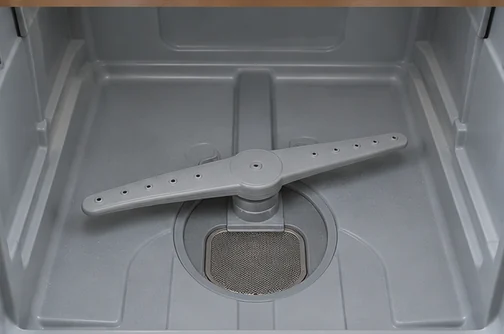
The float sits in a front corner of the tub, often the front right. Clear anything around it and lift it up and down by hand. It must move freely and rest down for the dishwasher to fill.
Look for a kinked line under the sink.
Follow the water line you can see from the valve toward the dishwasher. A kink or crushed spot can block the water. Don’t remove the panel at the bottom of the dishwasher; the hose and valve behind it are for a technician.
When to stop. If it still won’t fill with the valve open, the door latched and the float free, or you only hear a hum, stop and call an appliance technician. A failed water inlet valve or door switch is a job for a pro.
What it costs
- The checks above: free.
- Pro water inlet valve replacement: $75–$150.
- Pro dishwasher repair: $117–$300, most people pay about $187.
- Service call: $35–$100.
National US ranges from 2025–2026 cost guides: Fixr · Thumbtack. Prices in your area may differ.
Common causes
- Water valve closed. The valve under the sink must be fully open for the dishwasher to fill. You can check
- Door not latched or a setting on hold. An open door, Delay Start or Child Lock keeps the cycle from starting. You can check
- Float stuck up. If the float is held up, the dishwasher thinks it’s already full and won’t add water. You can check
- Kinked supply line. A kink or bend in the water line blocks the flow. You can check
- Pump seals dried out. GE says a dishwasher unused a week or longer can hum and not fill; running it weekly helps prevent this. You can check
- Failed water inlet valve or door switch. Bosch lists a faulty inlet valve, float or door switch as causes that need service. Call a pro
Sources: Whirlpool · GE Appliances · GE Appliances hum · Samsung · Bosch.
Further reading · Whirlpool
Still stuck? Get help with your exact problem.
Snap a photo and tell the app what you’ve tried. It walks you through your model, one safe step at a time, and tells you when to call a pro. Your first fix in the app is free.
The app is coming soon. Get one email the day it launches.
One email when the app launches. No spam. Privacy Policy