
Dishwasher smells
Find where the smell starts: the filter, old food in the tub, the drain hose, or the sink drain it shares.
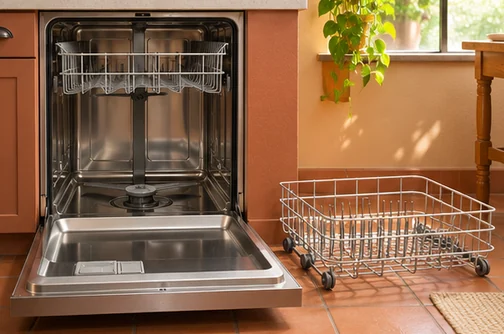
Short answer: Most dishwasher smells come from food and grease in the filter, dirty dishes left waiting, or sink water backing up through a drain hose with no high loop or air gap. Clean the filter and door seal, check the hose, then run hot water and an empty cleaning cycle. If water stands in the bottom or the smell keeps coming back, call a plumber or appliance technician.
Check the warning signs below first.
Use this guide at your own risk. It’s general information, not professional advice. By using it, you agree to our Terms of Use and Safety Waiver.
Check for danger first
If any of these are present, stop here.
- Gas odor, smoke or fire. Leave immediately. From outside, call emergency services. For a gas odor, also call the gas utility. Leave lights and switches alone.
- Burning smell, scorch marks, a hot outlet or a buzzing panel. Stop and call an electrician. Stay clear of a suspect panel.
- Water near electrical equipment or exposed wiring. Keep away. Never cross water to reach a plug or breaker. Call a qualified electrician.
None of these warning signs? Open the checks
What to check
Have ready. A soft brush, warm soapy water, a dishwasher cleaner or white vinegar, a flashlight and your owner’s manual.
Clean the filter.
Take out the removable filter at the bottom of the tub as your manual shows, and scrub it in warm soapy water. Food and grease trapped in the filter are a common cause of a sour or musty smell. Wipe out the filter area while it’s out.
Wipe the door seal and don’t store dirty dishes.
Wipe the door gasket and the bottom edge of the door with a damp cloth and warm soapy water. Dirty dishes left inside for days will make it smell, so run a rinse cycle while you wait for a full load.
Look at the drain hose under the sink.
The drain hose should rise in a high loop or run through an air gap on the sink. Without one, sink water can flow back into the dishwasher. If the smell stays after you clean the dishwasher, the sink drain or garbage disposal may be the source.
Run hot water, then an empty cleaning cycle.
Run the kitchen hot water for 15 to 30 seconds before you start; the water should be at least 120°F. Then run an empty hot cycle with a dishwasher cleaner or a bowl of white vinegar, as your manual says. Don’t use vinegar and detergent together, and leave the door slightly open afterward so it dries.
When to stop. If a lot of water stays in the bottom after a cycle, see the dishwasher not draining guide. If the hose has no high loop or air gap, or the smell keeps coming back, call a plumber. If it shows an error code or smells like burning, stop using it and call an appliance technician.
What it costs
- The checks above: free.
- Pro dishwasher repair: $100–$300, often about $200.
- Bad-smell repair: $50–$400. A new drain hose, $50–$100.
- Most repair services charge a $35–$100 service call, often credited toward the repair.
National US ranges from 2025–2026 cost guides: Fixr · This Old House. Prices in your area may differ.
Common causes
- Dirty filter. Food and grease caught in the removable filter at the bottom of the tub go sour and smell. You can check
- Food left in the tub or on the door seal. Moisture, warmth and food bits from dirty dishes and a grimy gasket let mold and mildew grow. You can check
- Water not hot enough. Below 120°F the detergent may not fully dissolve, so grease is left behind. You can check
- No high loop or air gap on the drain hose. Without one, wastewater from the sink can siphon back into the tub. Call a pro
- Not draining. A lot of water left in the bottom after a cycle means it isn’t draining, and standing water smells. Call a pro
Sources: GE Appliances · Samsung.
Further reading · GE Appliances
Still stuck? Get help with your exact problem.
Snap a photo and tell the app what you’ve tried. It walks you through your model, one safe step at a time, and tells you when to call a pro. Your first fix in the app is free.
The app is coming soon. Get one email the day it launches.
One email when the app launches. No spam. Privacy Policy