
Dishwasher not drying
Tell whether rinse aid, the dry setting, cool water or the way it’s loaded is leaving dishes wet, or whether the dishwasher isn’t heating.
Short answer: Wet dishes usually come from empty rinse aid, a cycle without heated dry, cool water at the start or a crowded load, and plastics often stay damp. Fill the rinse aid, turn on heated dry, run the sink hot first and load so water drains. If the tub isn’t warm after a heated-dry cycle, call an appliance technician.
Check the warning signs below first.
Use this guide at your own risk. It’s general information, not professional advice. By using it, you agree to our Terms of Use and Safety Waiver.
Check for danger first
If any of these are present, stop here.
- Gas odor, smoke or fire. Leave immediately. From outside, call emergency services. For a gas odor, also call the gas utility. Leave lights and switches alone.
- Burning smell, scorch marks, a hot outlet or a buzzing panel. Stop and call an electrician. Stay clear of a suspect panel.
- Water near electrical equipment or exposed wiring. Keep away. Never cross water to reach a plug or breaker. Call a qualified electrician.
None of these warning signs? Open the checks
What to check
Have ready. Rinse aid, a dish towel, the dishwasher’s manual or model number, and the kitchen sink faucet.
Fill the rinse aid.
Open the rinse aid cap on the inside of the door and fill it until the indicator shows full. Rinse aid helps water sheet off dishes instead of beading. If items still come out wet, raise the rinse aid setting one step and try again.
Turn on heated dry.
Choose a cycle with heated drying and turn on Heated Dry, or Extended Dry or Fan Dry if your model has them. Quick and Eco cycles may use less heat and leave dishes wetter.
Start with hot water.
Before you start the dishwasher, run the hot water at the kitchen sink until it’s hot, about 30 to 60 seconds. Water at about 120°F at the tap helps the final rinse dry dishes.
Load for drying and unload the bottom first.
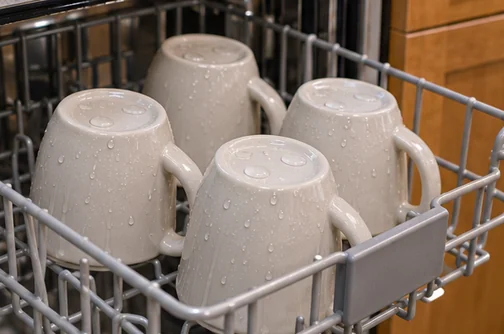
Angle cups and bowls so water drains, don’t nest items, and put plastics on the top rack. Plastics hold little heat and often stay damp, so towel them off. Unload the bottom rack first so the top rack doesn’t drip on dry dishes.
When to stop. Right after a Heated Dry cycle the tub should feel warm and may have steam. If it doesn’t, the breaker trips or an error code shows, stop and call an appliance repair technician. The heating element, fan and controls are behind the dishwasher’s panels.
What it costs
- The checks above: free.
- Pro dishwasher repair: $100–$300; most people pay about $187–$200.
- Common fix: a new heating element, $150–$300.
National US ranges from 2025–2026 cost guides: Fixr · Thumbtack. Prices in your area may differ.
Common causes
- Rinse aid empty or set low. Without enough rinse aid, water beads on dishes instead of sheeting off. You can check
- Heated dry not selected. Quick and Eco cycles, or any cycle without Heated Dry, use less heat to dry. You can check
- Cool water at the start. If the water isn’t near 120°F, the final rinse can’t leave dishes hot enough to dry. You can check
- Plastics and a crowded load. Plastic holds little heat and keeps droplets, and nested or packed items trap water and block airflow. You can check
- Unloading the top rack first. Water pooled on top-rack items drips onto the dry dishes below. You can check
- Heating element, thermostat or vent fan failed. If the tub stays cool after Heated Dry, the element or its high-limit thermostat may have failed, and on models with a fan the motor can fail. Call a pro
Sources: Whirlpool · Whirlpool drying tips · Bob Vila · Real Homes.
Further reading · Whirlpool
Still stuck? Get help with your exact problem.
Snap a photo and tell the app what you’ve tried. It walks you through your model, one safe step at a time, and tells you when to call a pro. Your first fix in the app is free.
The app is coming soon. Get one email the day it launches.
One email when the app launches. No spam. Privacy Policy