
Upstairs too hot
Even out room temperatures with the checks you can do yourself, and know when ducts, insulation or zoning need a pro.
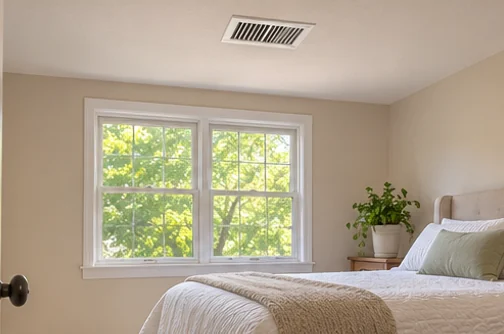
Short answer: Heat rises and the roof heats upper rooms, so blocked vents and returns, a dirty filter or sun through the windows make it worse. Open every vent, clear the returns, replace the filter, try the fan on ON and close the blinds. If one floor stays much warmer, call an HVAC technician about the ducts, insulation or zoning.
Check the warning signs below first.
Use this guide at your own risk. It’s general information, not professional advice. By using it, you agree to our Terms of Use and Safety Waiver.
Check for danger first
If any of these are present, stop here.
- Gas odor, smoke or fire. Leave immediately. From outside, call emergency services. For a gas odor, also call the gas utility. Leave lights and switches alone.
- Burning smell, scorch marks, a hot outlet or a buzzing panel. Stop and call an electrician. Stay clear of a suspect panel.
- Water near electrical equipment or exposed wiring. Keep away. Never cross water to reach a plug or breaker. Call a qualified electrician.
None of these warning signs? Open the checks
What to check
Have ready. A new air filter in the right size, a flashlight and a few minutes in each room.
Open the vents and clear the returns.
Open every supply vent. Don’t close downstairs vents to push air upstairs; Trane and Lennox say that throws the system out of balance and strains it. Move furniture, rugs and curtains off return vents, which Carrier says should never be covered or closed.
Replace a dirty filter.
A clogged filter restricts airflow and can make cooling uneven. Put in a new filter of the same size, and check it every 30 to 90 days.
Try the fan on ON.
In summer, Trane suggests switching the thermostat fan from AUTO to ON to mix the air between floors more evenly. It adds some wear on the blower, so switch back to AUTO if it doesn’t help.
Block the afternoon sun.
Close blinds, shades or curtains on sunny upstairs windows. Ceiling fans can make a room feel cooler, but they cool people, not the room, so turn them off when you leave.
When to stop. If one floor stays much warmer after these checks, call an HVAC technician. Leaky or undersized ducts, balancing dampers, attic insulation, zoning and system sizing are pro work.
What it costs
- The checks above: free.
- Pro ductwork repair: $200–$1,000, about $600 on average.
- Ductwork repair, national average range: $237–$955.
- Sealing the air ducts: $1,000–$3,000.
National US ranges from 2025–2026 cost guides: Fixr · Thumbtack. Prices in your area may differ.
Common causes
- Closed vents or blocked returns. Closed registers and returns covered by furniture or rugs throw off the airflow between rooms. You can check
- Dirty air filter. A clogged filter restricts airflow, and Lennox says it can contribute to uneven cooling. You can check
- Sun through upstairs windows. Afternoon sun through uncovered windows adds heat that the system has to remove. You can check
- Leaky or poorly installed ducts. Old, leaky or poorly sized ducts lose air before it reaches the upstairs rooms. Call a pro
- Hot attic and poor insulation. Heat rises, and a roof that absorbs sun heats the top floor when the attic isn’t well insulated. Call a pro
- One thermostat for two floors. A single-zone system can’t set each floor to its own temperature; zoning needs professional design. Call a pro
Further reading · Trane
Still stuck? Get help with your exact problem.
Snap a photo and tell the app what you’ve tried. It walks you through your model, one safe step at a time, and tells you when to call a pro. Your first fix in the app is free.
The app is coming soon. Get one email the day it launches.
One email when the app launches. No spam. Privacy Policy