
Radiator cold at the top
Tell whether trapped air, a closed valve or low system pressure is keeping a hot-water radiator from heating.
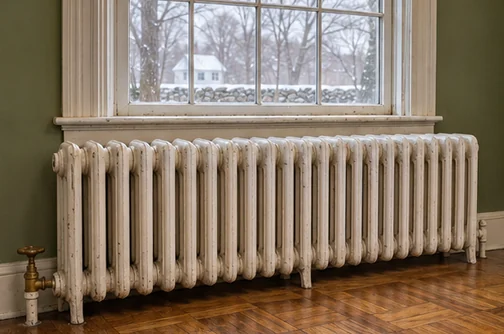
Short answer: A hot-water radiator that’s cold at the top usually has trapped air. Check that its valve is open, bleed it with the heat off and the radiator cool, then read the boiler’s pressure gauge. Never bleed steam radiators, and call a heating technician if it stays cold or the pressure reads low.
Check the warning signs below first.
Use this guide at your own risk. It’s general information, not professional advice. By using it, you agree to our Terms of Use and Safety Waiver.
Check for danger first
If any of these are present, stop here.
- Gas odor, smoke or fire. Leave immediately. From outside, call emergency services. For a gas odor, also call the gas utility. Leave lights and switches alone.
- Burning smell, scorch marks, a hot outlet or a buzzing panel. Stop and call an electrician. Stay clear of a suspect panel.
- Water near electrical equipment or exposed wiring. Keep away. Never cross water to reach a plug or breaker. Call a qualified electrician.
None of these warning signs? Open the checks
What to check
Have ready. A radiator key or flat screwdriver that fits the bleed valve, a cloth or small container, gloves and your boiler’s manual.
Find out if it’s hot water or steam.
Hot-water radiators have a small bleed valve near the top that opens with a radiator key. One-pipe steam radiators have an air vent that lets air out on its own. Don’t try to bleed a steam radiator. A clogged steam vent is a job for a heating pro.
Make sure the radiator valve is open.
Turn the valve handle, or the thermostatic valve head to its highest number, so it’s fully open. Don’t force a valve that won’t turn.
Bleed it with the heat off and the radiator cool.
Turn the heating off and let the radiator cool. Hold a cloth under the bleed valve and slowly turn the key counterclockwise until air hisses out. Close it as soon as a steady stream of water comes out.
Read the boiler’s pressure gauge.
Bleeding lets water out, so the system pressure can drop. Compare the reading with the range in your boiler’s manual. Don’t add water yourself. If it reads low, call a heating technician.
When to stop. If the radiator stays cold after one bleed, the pressure gauge reads low, the valve or radiator leaks, or you have steam heat, stop and call a licensed heating technician. Topping up a boiler and fixing valves or sludge are pro jobs.
What it costs
- The checks above: free.
- Pro hot-water radiator repair: $150–$500, about $350 on average.
- Pro radiator bleeding: $100–$200. A new radiator valve runs $150–$350.
- Thumbtack’s national average for radiator repair is $182–$816.
National US ranges from 2025–2026 cost guides: Fixr · Thumbtack. Prices in your area may differ.
Common causes
- Air trapped at the top. Air rises to the top of a hot-water radiator and keeps hot water out, so it’s cold above and warm below. You can check
- Radiator valve not fully open. If the thermostatic valve or the valve at the other end is closed, hot water can’t flow through. You can check
- Low system pressure. Bleeding lets water out, and low pressure can leave upper radiators without enough water. Call a pro
- Sludge in the radiator. A radiator that’s cold at the bottom and warm at the top often has sludge or debris that needs flushing. Call a pro
- Stuck valve or clogged steam vent. A seized valve needs replacing, and on steam heat a clogged vent keeps air in and steam out. Call a pro
Sources: EDF Energy · Viessmann · HeatingHelp (steam) · Fixr.
Further reading · This Old House
Still stuck? Get help with your exact problem.
Snap a photo and tell the app what you’ve tried. It walks you through your model, one safe step at a time, and tells you when to call a pro. Your first fix in the app is free.
The app is coming soon. Get one email the day it launches.
One email when the app launches. No spam. Privacy Policy