
Weak airflow from vents
Check the filter, the supply vents and the return grilles before you call about the ducts or the blower.
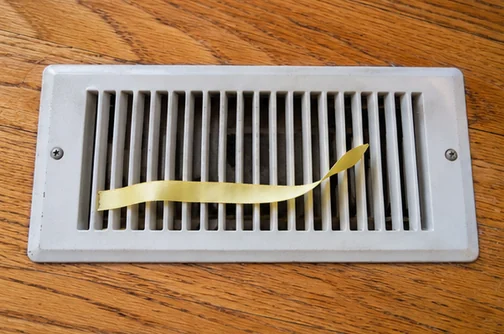
Short answer: Weak airflow is most often a clogged filter or closed or blocked vents and return grilles. Replace the filter, open every register, clear the returns and look for ice on the unit. If it’s still weak, leaky ducts, a frozen coil or the blower need an HVAC technician.
Check the warning signs below first.
Use this guide at your own risk. It’s general information, not professional advice. By using it, you agree to our Terms of Use and Safety Waiver.
Check for danger first
If any of these are present, stop here.
- Gas odor, smoke or fire. Leave immediately. From outside, call emergency services. For a gas odor, also call the gas utility. Leave lights and switches alone.
- Burning smell, scorch marks, a hot outlet or a buzzing panel. Stop and call an electrician. Stay clear of a suspect panel.
- Water near electrical equipment or exposed wiring. Keep away. Never cross water to reach a plug or breaker. Call a qualified electrician.
None of these warning signs? Open the checks
What to check
Have ready. A flashlight, a new air filter in the right size, and a list of the rooms with weak air.
Replace a dirty filter.
A clogged filter can reduce airflow or even block it. Replace it if it’s gray or clogged; most need changing every 1 to 3 months.
Open every supply register.
Make sure the vents in each room are open and not covered by furniture, rugs or drapes. Closing vents in some rooms restricts airflow to the whole system.
Clear the return grilles.
Return vents pull air back to the system and should never be covered or closed. Some large return grilles hold the filter, so check those too.
Look for ice.
If you see ice or frost on the unit or its pipes, the coil may be frozen and air can’t get through. Turn the system off at the thermostat and call for service.
When to stop. If airflow is still weak with a clean filter and open vents, call an HVAC technician. Leaky or crushed ducts, a frozen coil and blower motor or capacitor problems need a pro. Don’t open the furnace or air handler cabinet.
What it costs
- The checks above: free.
- Pro ductwork repair: $200–$1,000, about $600 on average; Thumbtack’s national range is $237–$955.
- Duct leak repair: $350–$650 on average.
- Blower motor repair: $200–$900.
National US ranges from 2025–2026 cost guides: Fixr · Thumbtack · Fixr AC repair. Prices in your area may differ.
Common causes
- Dirty filter. A clogged filter can reduce or block airflow to every room. You can check
- Closed or blocked supply vents. Closing or covering registers restricts airflow and makes the system work harder. You can check
- Blocked return grilles. Even partly covered returns limit how much air the system can pull in and push out. You can check
- Leaky or damaged ducts. Leaks and poorly installed or aging ducts lose air before it reaches the room; a pro has to find them. Call a pro
- Frozen or dirty indoor coil. Dirt or ice on the evaporator coil blocks air from passing through. Call a pro
- Blower motor or capacitor problem. A weak or failed blower can’t move enough air and needs a trained technician. Call a pro
Sources: Trane · Carrier · Trane airflow · Trane air handler.
Further reading · Trane
Still stuck? Get help with your exact problem.
Snap a photo and tell the app what you’ve tried. It walks you through your model, one safe step at a time, and tells you when to call a pro. Your first fix in the app is free.
The app is coming soon. Get one email the day it launches.
One email when the app launches. No spam. Privacy Policy