
AC vents sweating
Find out why cold air vents are dripping water and which simple checks stop the sweating.
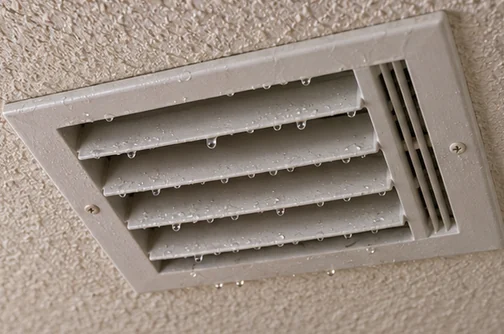
Short answer: Sweating vents usually mean humid air is touching registers that are too cold, often from a dirty filter, closed vents or high indoor humidity. Change the filter, open every vent and lower the humidity. If they keep dripping or the ceiling is stained or soft, call an HVAC technician.
Check the warning signs below first.
Use this guide at your own risk. It’s general information, not professional advice. By using it, you agree to our Terms of Use and Safety Waiver.
Check for danger first
If any of these are present, stop here.
- Gas odor, smoke or fire. Leave immediately. From outside, call emergency services. For a gas odor, also call the gas utility. Leave lights and switches alone.
- Burning smell, scorch marks, a hot outlet or a buzzing panel. Stop and call an electrician. Stay clear of a suspect panel.
- Water near electrical equipment or exposed wiring. Keep away. Never cross water to reach a plug or breaker. Call a qualified electrician.
None of these warning signs? Open the checks
What to check
Have ready. A new air filter in the right size, a towel, and an indoor humidity reading if your thermostat or a hygrometer shows one.
Check the air filter first.
A clogged filter cuts airflow, which makes the air leaving the vents colder and more likely to sweat. Replace or clean it as your system’s instructions say.
Open every vent and clear them.
Closed louvers or vents blocked by furniture, rugs or curtains also cut airflow. Open them all, even in rooms you don’t use.
Bring indoor humidity down.
Vents sweat when humid air touches cold metal. Keep windows and doors closed while the AC runs, use bathroom and kitchen fans, and run a dehumidifier if needed. The EPA suggests keeping indoor humidity between 30% and 50%.
Dry the vent and watch the ceiling.
Wipe the register dry and check the ceiling or wall around it for stains or soft spots. Steady dripping can damage ceilings and drywall and lead to mold.
When to stop. Stop and call an HVAC technician if the vents keep sweating after these checks, the ceiling around a vent is stained, soft or sagging, or you see mold or smell a musty odor. Insulating or sealing ducts in the attic and checking refrigerant or airflow are jobs for a pro.
What it costs
- The checks above: free.
- Pro AC repair: $250–$700, about $375 on average.
- Ductwork repair: usually $237–$955, up to $2,559 for big jobs.
National US ranges from 2025–2026 cost guides: Fixr · Thumbtack. Prices in your area may differ.
Common causes
- High indoor humidity. When indoor humidity rises above about 60%, the moisture condenses on cold vents and ducts. You can check
- Dirty air filter. A clogged filter cuts airflow, so the ducts and vents get colder than they should. You can check
- Closed or blocked vents. Shut louvers or furniture over vents restrict airflow, which makes the supply air colder. You can check
- Uninsulated or leaky ducts. Bare ducts in a hot attic or crawl space, or gaps where the duct meets the ceiling, let humid air reach cold metal. Call a pro
- Low refrigerant or another airflow problem. A dirty coil, restrictive ducts or low refrigerant can make the air too cold, and a technician has to check them. Call a pro
Sources: Lennox · Trane · Energy Vanguard.
Further reading · Lennox
Still stuck? Get help with your exact problem.
Snap a photo and tell the app what you’ve tried. It walks you through your model, one safe step at a time, and tells you when to call a pro. Your first fix in the app is free.
The app is coming soon. Get one email the day it launches.
One email when the app launches. No spam. Privacy Policy