
Water in the basement
Stay clear of electricity, find out whether the water comes from a pipe, the walls or the sump, and know who to call.
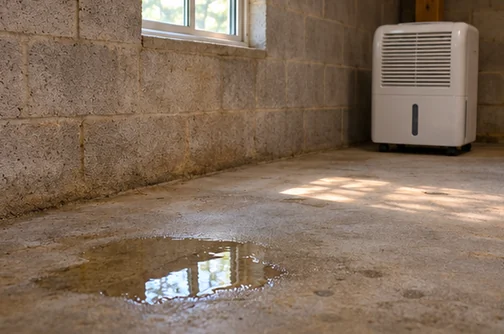
Short answer: Basement water usually comes from a leaking pipe or appliance, seepage after rain, a sump pump problem or gutters dumping water by the foundation. Stay out if electricity could reach the water and call the utility, find the source, shut off the main valve for a pipe leak and check gutters and downspouts. Call a plumber for leaks, an electrician before the power goes back on, and a waterproofing contractor for seepage that keeps coming back.
Check the warning signs below first.
Use this guide at your own risk. It’s general information, not professional advice. By using it, you agree to our Terms of Use and Safety Waiver.
Check for danger first
If any of these are present, stop here.
- Gas odor, smoke or fire. Leave immediately. From outside, call emergency services. For a gas odor, also call the gas utility. Leave lights and switches alone.
- Burning smell, scorch marks, a hot outlet or a buzzing panel. Stop and call an electrician. Stay clear of a suspect panel.
- Water near electrical equipment or exposed wiring. Keep away. Never cross water to reach a plug or breaker. Call a qualified electrician.
None of these warning signs? Open the checks
What to check
Have ready. A flashlight, rubber boots, the location of your main water shutoff, and your electric and gas utility numbers.
Stay out if electricity could be in the water.
If standing water could reach outlets, cords, appliances, the furnace or the electrical panel, don’t walk in. Call your electric utility to disconnect the power. If water is above the gas meter or gas appliances, call the gas utility too.
Find where the water comes from.
Water spraying or dripping from a pipe, the water heater or a washer hose is a plumbing leak. Damp walls or water at floor cracks after rain or snowmelt is seepage. Water around the sump pit points to the sump pump; see our sump pump guide.
Shut off the main water valve for a pipe leak.
If a pipe is leaking and you can reach the main shutoff without stepping into water near electricity, turn it off and call a plumber.
Check gutters and downspouts.
From the ground, look for overflowing gutters and downspouts that empty next to the house. Downspout extensions should carry water at least 4–6 feet from the foundation, and the ground should slope away from the house.
When to stop. Have a licensed electrician check the wiring and any wet appliances before the power goes back on, and have gas appliances checked by a qualified contractor if they got wet. Call a plumber for pipe leaks and a waterproofing contractor for seepage or wall cracks that keep coming back. Start drying within 48 hours to limit mold.
What it costs
- The checks above: free.
- Plumber to fix a leaking pipe: $150–$450.
- Flooded basement cleanup: $2,000–$7,000, about $4,000 on average.
- Interior basement waterproofing: about $3,000 on average.
National US ranges from 2025–2026 cost guides: This Old House plumbing costs · Fixr · This Old House waterproofing costs. Prices in your area may differ.
Common causes
- Gutters and downspouts dumping water by the house. Overflowing gutters or short downspouts soak the soil next to the foundation; extensions should reach 4–6 feet out. You can check
- Ground sloping toward the house. Soil that slopes toward the foundation sends rain to the walls; small regrading can be done with a shovel. You can check
- Leaking or burst pipe. A pipe, water heater or appliance leak keeps adding water until the main valve is shut and a plumber repairs it. Call a pro
- Sump pump failure. A pump that fails or loses power during heavy rain lets groundwater rise into the basement. Call a pro
- Foundation cracks or seepage. Water from heavy rain or snowmelt can push through cracks and walls, which needs a waterproofing contractor. Call a pro
- Sewer backup. A backed-up municipal sewer can send dirty water into the basement and needs a plumber. Call a pro
Sources: This Old House · We Energies · FEMA.
Further reading · FEMA
Still stuck? Get help with your exact problem.
Snap a photo and tell the app what you’ve tried. It walks you through your model, one safe step at a time, and tells you when to call a pro. Your first fix in the app is free.
The app is coming soon. Get one email the day it launches.
One email when the app launches. No spam. Privacy Policy