
Pipes sweating or dripping condensation
Tell sweat on cold pipes apart from a real leak, then cut the moisture with lower humidity and pipe insulation.
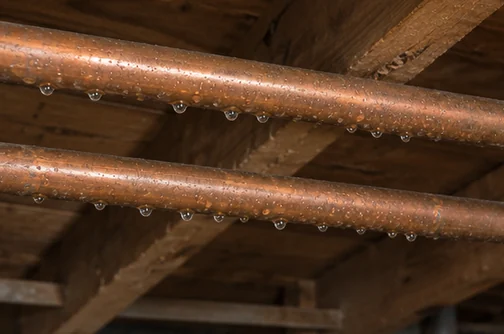
Short answer: Cold water pipes sweat when warm, humid air touches them. Dry the pipe and watch to rule out a leak, keep humidity below 60% and wrap the cold pipes you can reach in foam insulation. If water keeps dripping from one spot, call a plumber.
Check the warning signs below first.
Use this guide at your own risk. It’s general information, not professional advice. By using it, you agree to our Terms of Use and Safety Waiver.
Check for danger first
If any of these are present, stop here.
- Gas odor, smoke or fire. Leave immediately. From outside, call emergency services. For a gas odor, also call the gas utility. Leave lights and switches alone.
- Burning smell, scorch marks, a hot outlet or a buzzing panel. Stop and call an electrician. Stay clear of a suspect panel.
- Water near electrical equipment or exposed wiring. Keep away. Never cross water to reach a plug or breaker. Call a qualified electrician.
None of these warning signs? Open the checks
What to check
Have ready. A towel, a flashlight and, for insulation, foam pipe sleeves sized to your pipes and tape.
Dry the pipe and watch.
Wipe the pipe and the floor below it dry, then check back. Sweat forms as droplets on the surface of cold pipes and comes and goes with humidity. Water that keeps dripping or pooling from one spot, even when the air is drier, points to a leak.
Lower the humidity.
Sweat forms when warm, moist air touches a cold pipe. EPA says to keep indoor humidity below 60%, ideally 30% to 50%. Run a dehumidifier or the air conditioner and use bath and kitchen fans.
Insulate the cold pipes you can reach.
EPA says to cover cold water pipes with insulation. Closed-cell foam sleeves work well: pick a size that fits snugly, leave no gaps between pieces and tape the seams.
When to stop. If water keeps dripping or pooling after the pipe is dry and the humidity is down, it comes from one fitting, or you see stains or mold near the pipe, stop and call a plumber. A leak should be fixed as soon as possible.
What it costs
- The checks above: free.
- Plumber to fix a leaking pipe: $150–$450; harder repairs $228–$752.
- Plumbers charge about $100 an hour on average, plus a service fee.
National US ranges from 2025–2026 cost guides: This Old House · Thumbtack. Prices in your area may differ.
Common causes
- Cold pipes in humid air. Cold water cools the pipe’s surface, so moisture in warm air condenses on it. You can check
- High indoor humidity. Steam from cooking and showers and poor ventilation raise humidity above the 60% EPA limit. You can check
- Bare cold water pipes. Uninsulated cold pipes collect condensation; insulation reduces it and the mold risk that comes with it. You can check
- A real leak. Steady dripping or pooling from one spot, low water pressure or stains near the pipe point to a leak. Call a pro
Sources: EPA · Building America Solution Center (DOE) · WaterSafe.
Further reading · EPA
Still stuck? Get help with your exact problem.
Snap a photo and tell the app what you’ve tried. It walks you through your model, one safe step at a time, and tells you when to call a pro. Your first fix in the app is free.
The app is coming soon. Get one email the day it launches.
One email when the app launches. No spam. Privacy Policy