
Toilet tank sweating
Tell condensation from a real leak, then cut the humidity and cold water that make the tank sweat.
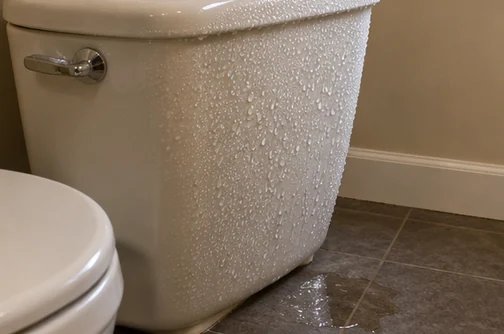
Short answer: A sweating tank is condensation: humid bathroom air meets the cold water inside. Rule out a leak with food coloring, make sure the toilet isn’t running and run the bath fan. If it still sweats, a licensed plumber can add a tank liner or an anti-sweat valve.
Check the warning signs below first.
Use this guide at your own risk. It’s general information, not professional advice. By using it, you agree to our Terms of Use and Safety Waiver.
Check for danger first
If any of these are present, stop here.
- Gas odor, smoke or fire. Leave immediately. From outside, call emergency services. For a gas odor, also call the gas utility. Leave lights and switches alone.
- Burning smell, scorch marks, a hot outlet or a buzzing panel. Stop and call an electrician. Stay clear of a suspect panel.
- Water near electrical equipment or exposed wiring. Keep away. Never cross water to reach a plug or breaker. Call a qualified electrician.
None of these warning signs? Open the checks
What to check
Have ready. Food coloring, a towel, a flashlight and a hygrometer if you have one.
Make sure it’s sweat, not a leak.
Dry the outside of the tank. Add a few drops of food coloring to the tank water and wait 30 minutes without flushing. Color in the bowl or on the floor means a leak. Clear drops on the outside of the tank mean condensation.
Check that the toilet isn’t running.
Lift the tank lid and listen. A toilet that keeps refilling brings in fresh cold water, which keeps the tank cold and makes sweating worse. Fix the running first.
Lower the bathroom humidity.
Run the bath fan during showers and for at least 30 minutes after. Open the door or a window, or run a dehumidifier. Humidity that stays above 60% makes sweating likely.
Wipe it and protect the floor.
Sweating is not a malfunction, but the drips can damage the floor and grow mold. Wipe the tank and keep a towel at the base until the humidity comes down.
When to stop. If colored water reaches the floor, it’s a leak: call a plumber. If the tank still sweats with good ventilation, ask a licensed plumber about an insulated tank liner or an anti-sweat valve. The valve mixes some hot water into the toilet supply and means cutting into the water lines.
What it costs
- The checks above: free.
- Pro toilet repair: $149–$355, most people pay about $230.
- Common fix for a running toilet: a new flapper, $60–$120 with labor.
National US ranges from 2025–2026 cost guides: Thumbtack · Fixr. Prices in your area may differ.
Common causes
- Humid bathroom air. Warm, moist air from showers condenses on the cold tank, like drops on a cold glass. You can check
- Poor ventilation. Without a running bath fan or open door, the moisture stays in the room. You can check
- A running toilet. A tank that keeps refilling stays full of fresh cold water and sweats more. You can check
- Very cold supply water. Cold incoming water, common in summer, keeps the tank below the dew point; a liner or anti-sweat valve fixes it. Call a pro
- A real leak. Color from the food coloring test on the floor means a leak, not condensation. Call a pro
Sources: TOTO · This Old House.
Further reading · This Old House
Still stuck? Get help with your exact problem.
Snap a photo and tell the app what you’ve tried. It walks you through your model, one safe step at a time, and tells you when to call a pro. Your first fix in the app is free.
The app is coming soon. Get one email the day it launches.
One email when the app launches. No spam. Privacy Policy