
Toilet keeps running
Find out whether water is leaking past the flapper or spilling into the overflow tube, and fix the simple causes.
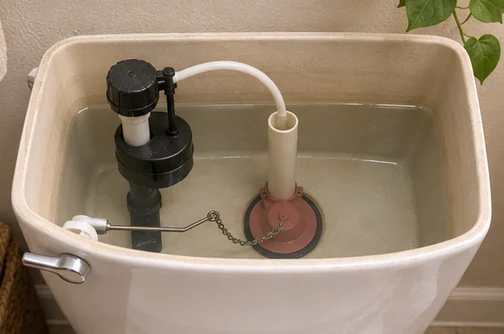
Short answer: A running toilet is usually a leaking flapper or water set so high it spills into the overflow tube. Check the water level and float, the chain and refill tube, then do a 10-minute food coloring test. If it still runs after a new flapper, a plumber should replace the fill valve or flush valve.
Check the warning signs below first.
Use this guide at your own risk. It’s general information, not professional advice. By using it, you agree to our Terms of Use and Safety Waiver.
Check for danger first
If any of these are present, stop here.
- Gas odor, smoke or fire. Leave immediately. From outside, call emergency services. For a gas odor, also call the gas utility. Leave lights and switches alone.
- Burning smell, scorch marks, a hot outlet or a buzzing panel. Stop and call an electrician. Stay clear of a suspect panel.
- Water near electrical equipment or exposed wiring. Keep away. Never cross water to reach a plug or breaker. Call a qualified electrician.
None of these warning signs? Open the checks
What to check
Have ready. A flashlight, food coloring and a towel to set the tank lid on.
Lift the tank lid and watch it refill.
Flush once and look at the overflow tube, the open pipe in the middle of the tank. If water keeps spilling into it, the water is set too high or the fill valve isn’t shutting off. The water should stop about 1/2 inch below the top of the tube.
Lower the float if the water is too high.
The float rises with the water and shuts off the fill valve. Most fill valves have an adjustment screw or clip for the float. Lower it a little, flush, and check the level again.
Check the chain and the refill tube.
The flapper chain needs about 1/4 to 1/2 inch of slack. If it’s too tight or caught under the flapper, the flapper can’t seal. The small refill tube should clip to the top of the overflow tube, above the water, not be pushed down inside it.
Do a food coloring test.
Put a few drops of food coloring in the tank and don’t flush for 10 minutes. If color shows up in the bowl, the flapper is leaking. Wipe slime off the flapper and its seat. A flapper that is warped or more than 5 years old should be replaced with one that fits your toilet.
When to stop. If it still runs after a new flapper, the fill valve won’t shut off, or there is water on the floor, turn off the valve behind the toilet and call a plumber. The fill valve or flush valve likely needs replacing.
What it costs
- The checks above: free.
- Pro toilet repair: $149–$355, most people pay about $230.
- Common fixes: a new flapper, $60–$120; a new fill valve, $60–$150.
National US ranges from 2025–2026 cost guides: Thumbtack · Fixr. Prices in your area may differ.
Common causes
- Leaking flapper. The flapper is the most common leak point; a worn, warped or dirty one lets water slip into the bowl. You can check
- Water level set too high. Water that reaches the top of the overflow tube drains into the bowl, so the fill valve keeps refilling. You can check
- Chain too tight or tangled. A short or snagged chain keeps the flapper from sealing. You can check
- Refill tube pushed into the overflow. A refill tube that sits below the water line can siphon tank water into the bowl. You can check
- Chlorine tablets in the tank. Bleach or chlorine drop-in cleaners can warp the flapper and damage other tank parts. You can check
- Worn fill valve or flush valve. If a new flapper doesn’t stop it, the fill valve or the flush valve seat needs replacing. Call a pro
Sources: Fluidmaster flapper leaks · Fluidmaster running toilet · EPA WaterSense · This Old House.
Further reading · Fluidmaster
Still stuck? Get help with your exact problem.
Snap a photo and tell the app what you’ve tried. It walks you through your model, one safe step at a time, and tells you when to call a pro. Your first fix in the app is free.
The app is coming soon. Get one email the day it launches.
One email when the app launches. No spam. Privacy Policy