
Water pressure too high
Measure your home’s water pressure, tell whether it’s above the 80 psi limit, and know the signs that a pressure reducing valve is needed or failing.
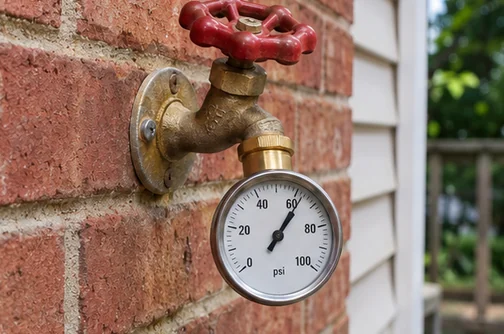
Short answer: Pressure over 80 psi is too high for home plumbing and usually means a missing or failing pressure reducing valve. Test with a gauge at an outdoor faucet, read the number, look for a PRV and watch for banging pipes, running toilets and leaks. Installing or adjusting a PRV is a job for a licensed plumber.
Check the warning signs below first.
Use this guide at your own risk. It’s general information, not professional advice. By using it, you agree to our Terms of Use and Safety Waiver.
Check for danger first
If any of these are present, stop here.
- Gas odor, smoke or fire. Leave immediately. From outside, call emergency services. For a gas odor, also call the gas utility. Leave lights and switches alone.
- Burning smell, scorch marks, a hot outlet or a buzzing panel. Stop and call an electrician. Stay clear of a suspect panel.
- Water near electrical equipment or exposed wiring. Keep away. Never cross water to reach a plug or breaker. Call a qualified electrician.
None of these warning signs? Open the checks
What to check
Have ready. A water pressure gauge that screws onto an outdoor faucet (sold at hardware stores), a flashlight and a notepad.
Test the pressure at an outdoor faucet.
Turn off every faucet and water-using appliance. Screw the gauge onto an outdoor faucet or hose bib, open the faucet fully and read the gauge. Pressure can change with the time of day, so test more than once.
Read the number.
Sustained pressure over 80 psi can damage plumbing and fixtures, and most plumbing codes require a pressure reducing valve (PRV) above 80 psi. Most plumbers recommend a PRV setting between 35 and 60 psi.
Look for a pressure reducing valve.
A PRV sits on your side of the water meter, often near the water heater, the water softener or where the main line enters the house. If you have one and pressure is still high, it may need adjustment or service.
Watch for signs of high pressure.
Banging or hammering in the walls, a toilet that runs on its own, dripping or leaking faucets, and burst hoses can all come from pressure that’s too high or a failing PRV.
When to stop. If pressure reads over 80 psi, or you have a PRV and pressure is still high, stop and call a licensed plumber. A PRV should be installed and adjusted by a licensed plumber, and your water utility can’t lower the pressure for one home.
What it costs
- The checks above: free.
- Pro pressure reducing valve install: $485–$700.
- Plumber service calls run $50–$300.
National US ranges from 2025–2026 cost guides: Thumbtack · Fixr. Prices in your area may differ.
Common causes
- No pressure reducing valve. Utility pressure can run well over 80 psi, and the homeowner is responsible for a PRV on their side of the meter. Call a pro
- Failing pressure reducing valve. PRVs usually last 10 to 15 years, and a failing one can let pressure climb or swing. Call a pro
- PRV set too high. An existing valve may only need adjusting, which should be done by a licensed plumber. Call a pro
- High pressure at certain times of day. Pressure changes with demand and system operations, so one reading can miss the peak. You can check
Sources: Las Vegas Valley Water District · Rainbow Municipal Water District · Building America Solution Center (PNNL).
Further reading · Las Vegas Valley Water District
Still stuck? Get help with your exact problem.
Snap a photo and tell the app what you’ve tried. It walks you through your model, one safe step at a time, and tells you when to call a pro. Your first fix in the app is free.
The app is coming soon. Get one email the day it launches.
One email when the app launches. No spam. Privacy Policy