
Toilet leaking at the base
Find out whether the water is condensation, a dripping supply line, a loose toilet or a failed wax ring under the base.
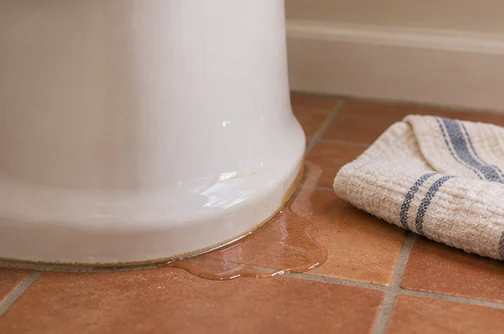
Short answer: Water at the base is often a failed wax ring, but condensation, a dripping supply line or a loose toilet can look the same. Dry everything, do a dye test, then check the supply line and whether the toilet rocks. If water still comes from under the base, stop using that toilet and call a plumber to replace the wax ring.
Check the warning signs below first.
Use this guide at your own risk. It’s general information, not professional advice. By using it, you agree to our Terms of Use and Safety Waiver.
Check for danger first
If any of these are present, stop here.
- Gas odor, smoke or fire. Leave immediately. From outside, call emergency services. For a gas odor, also call the gas utility. Leave lights and switches alone.
- Burning smell, scorch marks, a hot outlet or a buzzing panel. Stop and call an electrician. Stay clear of a suspect panel.
- Water near electrical equipment or exposed wiring. Keep away. Never cross water to reach a plug or breaker. Call a qualified electrician.
None of these warning signs? Open the checks
What to check
Have ready. Paper towels, food coloring and a flashlight.
Dry everything, then do a dye test.
Wipe the floor, tank and supply line dry. Put a few drops of food coloring in the tank and wait 30 minutes without flushing. Colored water on the floor or the outside of the tank means a leak, not condensation.
Rule out a sweating tank.
In humid weather, cold water in the tank can make the outside sweat and drip onto the floor. If the dye test shows no color but the outside of the tank is wet, it’s likely condensation. A running toilet keeps the tank cold and makes it worse, so fix that first.
Check the supply line and its nuts.
Run a dry paper towel along the line from the wall valve to the tank. If the nut under the tank drips, snug it by hand only. Fluidmaster suggests replacing a supply line that is more than 5 years old.
See if the toilet rocks.
A toilet that rocks can break the seal under it. If the caps over the bolts at the base come off, snug the nuts no more than a quarter-turn past finger-tight. Overtightening can crack the bowl.
When to stop. If water still seeps from under the base, the wax ring has likely failed. Stop using that toilet, because the leak can damage the subfloor, and call a plumber. Replacing the wax ring means removing the toilet.
What it costs
- The checks above: free.
- Pro toilet repair: $149–$355, most people pay about $230.
- Common fix: a new wax ring seal, $60–$200.
- If the floor flange is damaged: a pro repair averages $145–$165.
National US ranges from 2025–2026 cost guides: Thumbtack · Fixr · This Old House. Prices in your area may differ.
Common causes
- Condensation on the tank. Cold water in the tank makes it sweat in humid air, and the drips can look like a leak. You can check
- Dripping supply line or nut. A worn supply line or a loose nut under the tank drips down to the floor. You can check
- Loose floor bolts. A toilet that rocks can break its seal; snugging the bolt nuts gently can stop the rocking. You can check
- Failed wax ring. The wax ring seals the toilet to the drain, and when it fails, water seeps out under the base. Call a pro
- Leaking tank bolts or gasket. Worn bolt gaskets or loose nuts between the tank and bowl let water run down the back of the toilet. Call a pro
- Damaged floor flange. A damaged or badly installed flange can make the toilet unstable and leak. Call a pro
Sources: This Old House leaks · This Old House sweating tank · Fluidmaster · Roto-Rooter.
Further reading · This Old House
Still stuck? Get help with your exact problem.
Snap a photo and tell the app what you’ve tried. It walks you through your model, one safe step at a time, and tells you when to call a pro. Your first fix in the app is free.
The app is coming soon. Get one email the day it launches.
One email when the app launches. No spam. Privacy Policy