
Water stain on the ceiling below a bathroom
Narrow down which bathroom fixture is leaking and know when a wet ceiling needs a plumber right away.
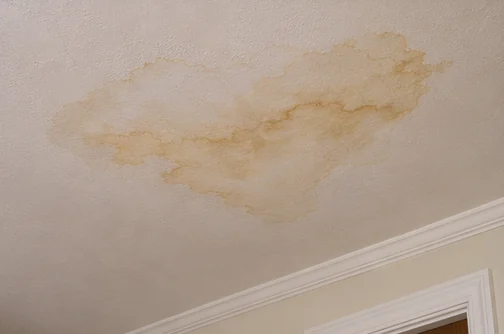
Short answer: A stain below a bathroom usually comes from failed caulk or grout at the tub or shower, a leaking toilet seal, or a leaking pipe. Test one fixture at a time, check the caulk and the toilet base, and dry the area within 24 to 48 hours. If the ceiling sags, keep away, turn off the water and call a plumber.
Check the warning signs below first.
Use this guide at your own risk. It’s general information, not professional advice. By using it, you agree to our Terms of Use and Safety Waiver.
Check for danger first
If any of these are present, stop here.
- Gas odor, smoke or fire. Leave immediately. From outside, call emergency services. For a gas odor, also call the gas utility. Leave lights and switches alone.
- Burning smell, scorch marks, a hot outlet or a buzzing panel. Stop and call an electrician. Stay clear of a suspect panel.
- Water near electrical equipment or exposed wiring. Keep away. Never cross water to reach a plug or breaker. Call a qualified electrician.
None of these warning signs? Open the checks
What to check
Have ready. A flashlight, towels and a bucket.
Test one fixture at a time.
Dry the bathroom, then use one fixture at a time: the shower, the tub, the sink and the toilet. Watch for water escaping at shower doors, tub edges and the toilet base, and check whether the stain grows afterward.
Check caulk and grout around the tub and shower.
Cracked or missing caulk, loose tiles, worn grout and bad door seals let shower water get under the floor and reach the ceiling below.
Check the toilet.
Look for water pooling at the base, or a toilet that rocks. A leaking seal under the toilet is a job for a plumber.
Dry the area and watch for mold.
The EPA says to dry water-damaged areas within 24 to 48 hours to prevent mold. If mold covers more than about 10 square feet, get a professional.
When to stop. If the ceiling is sagging or bulging, keep everyone out from under it, turn off the water and call a plumber. If water is near a light or fan, turn off that circuit’s breaker, don’t use the switch, and have an electrician check it. Call a plumber too if you can’t find the source.
What it costs
- The checks above: free.
- Plumber to fix a leaking pipe: $150–$450.
- Repairing a water-damaged ceiling: $200–$1,500.
National US ranges from 2025–2026 cost guides: This Old House · Fixr. Prices in your area may differ.
Common causes
- Failed caulk or grout at the tub or shower. Worn caulk, cracked grout or loose tiles let water get behind the surface each time the shower runs. You can check
- Worn shower door seals. Damaged seals let water spray or run out onto the floor during showers. You can check
- Leaking toilet seal. Water at the base or a toilet that rocks can mean the seal under it has failed and needs replacing. Call a pro
- Leaking drain or supply pipe. Loose or corroded connections in the pipes under the floor drip onto the ceiling below. Call a pro
- Faulty tub or shower drain. A failed drain assembly leaks under the tub or shower when water goes down it. Call a pro
Sources: This Old House · Hunker · EPA · SERVPRO.
Further reading · This Old House
Still stuck? Get help with your exact problem.
Snap a photo and tell the app what you’ve tried. It walks you through your model, one safe step at a time, and tells you when to call a pro. Your first fix in the app is free.
The app is coming soon. Get one email the day it launches.
One email when the app launches. No spam. Privacy Policy