
Basement floor drain backing up
Stop the water, tell a local clog from a main sewer line backup, and keep away from sewage.
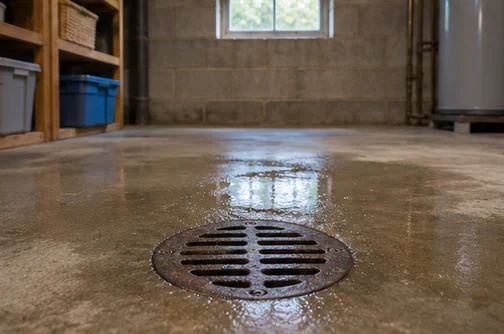
Short answer: Stop using water, then check whether other drains back up too. If more than one does, or you see sewage, the main sewer line is likely blocked: call a licensed plumber. Use a plunger only on a light clog in the floor drain alone, and never use chemical drain cleaner.
Check the warning signs below first.
Use this guide at your own risk. It’s general information, not professional advice. By using it, you agree to our Terms of Use and Safety Waiver.
Check for danger first
If any of these are present, stop here.
- Gas odor, smoke or fire. Leave immediately. From outside, call emergency services. For a gas odor, also call the gas utility. Leave lights and switches alone.
- Burning smell, scorch marks, a hot outlet or a buzzing panel. Stop and call an electrician. Stay clear of a suspect panel.
- Water near electrical equipment or exposed wiring. Keep away. Never cross water to reach a plug or breaker. Call a qualified electrician.
None of these warning signs? Open the checks
What to check
Have ready. A flashlight, rubber boots and gloves, a plunger, a bucket and old towels.
Stop using water.
Don’t run sinks, showers, toilets, the washer or the dishwasher, and tell everyone in the house. Water sent down any drain can come back up through the floor drain.
Check the other drains.
Look at the lowest toilet, tub and sinks. If more than one drain is backing up or slow, the main sewer line is likely blocked. Stop here and call a plumber.
Keep away from sewage.
If the water is dirty or smells like sewage, keep children and pets out. If you must go near it, wear rubber boots and gloves and wash your hands after. Sewage carries germs that cause illness.
Try a plunger only on a light clog.
If only the floor drain is slow and the water is clear, make sure water covers the plunger head, seal the drain and plunge for about 20 seconds. Repeat a few times. Never pour in chemical drain cleaner. It won’t clear a main line and leaves a hazard for the plumber.
When to stop. If more than one drain backs up, you see sewage, a plunger doesn’t clear it in a few tries, or water is near outlets, cords or appliances, stop and call a licensed plumber. Clearing the main sewer line is a plumber’s job.
What it costs
- The checks above: free.
- Main sewer line cleaning: $200–$600, about $250 on average.
- Clearing a main line stoppage: $100–$600. A camera inspection: $290–$640.
National US ranges from 2025–2026 cost guides: Fixr · Thumbtack. Prices in your area may differ.
Common causes
- Main sewer line clog. The floor drain is often the lowest opening, so a blocked main line shows up there first. Call a pro
- Tree roots or a broken pipe. Roots grow into old pipe joints, and collapsed pipe blocks the line to the street. Call a pro
- Wipes and grease in the line. Wipes don’t break down and grease hardens in cold pipes, building into a full clog. Call a pro
- Sand and dirt in the drain trap. Debris collects in the floor drain’s trap or pipe and backs water up onto the floor. Call a pro
Sources: This Old House · Family Handyman · Roto-Rooter · Oatey.
Further reading · This Old House
Still stuck? Get help with your exact problem.
Snap a photo and tell the app what you’ve tried. It walks you through your model, one safe step at a time, and tells you when to call a pro. Your first fix in the app is free.
The app is coming soon. Get one email the day it launches.
One email when the app launches. No spam. Privacy Policy