
Washer drain overflowing
Find out whether the drain hose, lint, too much detergent or a clog in the standpipe makes water spill out.
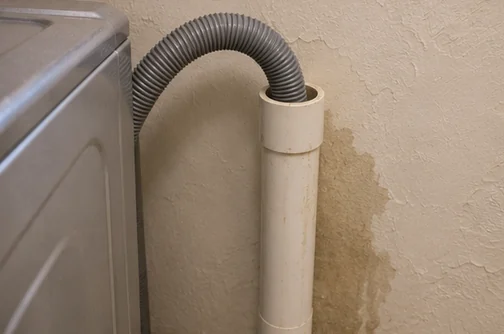
Short answer: A clog in the standpipe is the most common cause, but a hose pushed in too far or sealed, lint and too much detergent also cause spills. Set the hose with an air gap, clear kinks and lint, and use less detergent. If it still overflows, call a licensed plumber.
Check the warning signs below first.
Use this guide at your own risk. It’s general information, not professional advice. By using it, you agree to our Terms of Use and Safety Waiver.
Check for danger first
If any of these are present, stop here.
- Gas odor, smoke or fire. Leave immediately. From outside, call emergency services. For a gas odor, also call the gas utility. Leave lights and switches alone.
- Burning smell, scorch marks, a hot outlet or a buzzing panel. Stop and call an electrician. Stay clear of a suspect panel.
- Water near electrical equipment or exposed wiring. Keep away. Never cross water to reach a plug or breaker. Call a qualified electrician.
None of these warning signs? Open the checks
What to check
Have ready. Towels, a flashlight, cable ties, your washer’s manual and a tape measure.
Stop the washer.
Pause or cancel the cycle so it stops pumping water. If water is spreading toward outlets, cords or the washer’s plug, follow the danger check at the top of this page first.
Check how far the hose goes in.
Whirlpool says no more than 4.5 inches of drain hose should sit inside the standpipe. Don’t tape or seal the hose to the pipe; it needs an air gap around it. Secure it with a cable tie so it can’t pop out.
Look for kinks and lint.
Straighten any kinked drain hose. Lint from clothes builds up in the drain over time. Use a lint bag for linty items and clean the washer’s lint trap or filter if your manual shows one.
Use less detergent.
Too much detergent, or regular detergent in a high-efficiency (HE) washer, makes extra suds that can spill out. Measure by the label and your manual, and use less if you have soft water or a water softener.
When to stop. If it still overflows with the hose set right and less detergent, or other drains back up too, stop and call a licensed plumber. A clog you can’t reach, a standpipe outside the height range in your manual, or a main line problem is a plumber’s job.
What it costs
- The checks above: free.
- Pro drain cleaning: $186–$549 on average nationwide.
- Plumber to snake a clogged drain: $100–$500.
National US ranges from 2025–2026 cost guides: Thumbtack · This Old House. Prices in your area may differ.
Common causes
- Clog in the standpipe or drain. A blockage in the standpipe or drain line is the most common reason the water spills out. Call a pro
- Hose pushed in too far or sealed. Without an air gap around the hose, water can siphon and the drain can’t take the flow properly. You can check
- Lint buildup. Clothing fibers collect in the drain over time and narrow it. You can check
- Too much detergent. Extra suds, common with soft water, overflow and leave residue that adds to clogs. You can check
- Kinked drain hose. A kink in the hose disrupts the flow and can cause spills. You can check
- Undersized or wrong-height standpipe. A drain pipe that is too small or outside the washer’s height range can’t handle the pump’s flow. Call a pro
Sources: This Old House · Whirlpool · LG · GE Appliances.
Further reading · This Old House
Still stuck? Get help with your exact problem.
Snap a photo and tell the app what you’ve tried. It walks you through your model, one safe step at a time, and tells you when to call a pro. Your first fix in the app is free.
The app is coming soon. Get one email the day it launches.
One email when the app launches. No spam. Privacy Policy