
Light bulbs burning out quickly
Check the bulb, the fixture’s rating, the dimmer and vibration, and know when it points to wiring or high voltage.
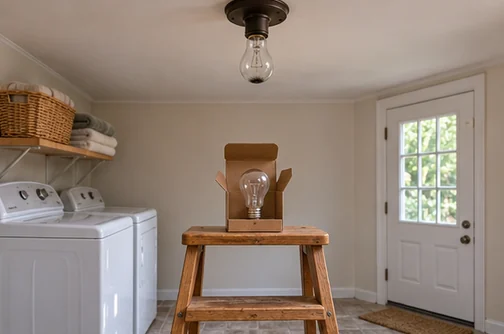
Short answer: Bulbs that burn out fast are usually loose, too many watts for the fixture, the wrong LED for an enclosed fixture or a dimmer, or shaken by a fan or opener. Check each of those first. If bulbs fail in many fixtures, or a fixture flickers, buzzes or smells burnt, high voltage or loose wiring may be the cause, and that needs a licensed electrician.
Check the warning signs below first.
Use this guide at your own risk. It’s general information, not professional advice. By using it, you agree to our Terms of Use and Safety Waiver.
Check for danger first
If any of these are present, stop here.
- Gas odor, smoke or fire. Leave immediately. From outside, call emergency services. For a gas odor, also call the gas utility. Leave lights and switches alone.
- Burning smell, scorch marks, a hot outlet or a buzzing panel. Stop and call an electrician. Stay clear of a suspect panel.
- Water near electrical equipment or exposed wiring. Keep away. Never cross water to reach a plug or breaker. Call a qualified electrician.
None of these warning signs? Open the checks
What to check
Have ready. A new bulb, the fixture’s wattage label, the bulb’s package, and a note of which fixtures burn out bulbs.
Make sure the bulb is snug.
With the light off and the bulb cool, screw it in until it is snug but not forced. A loose bulb makes poor contact and burns out sooner. Overtightening can damage the socket.
Match the bulb to the fixture.
Read the fixture’s maximum wattage label and don’t go over it. In an enclosed fixture, like a closed porch light or a covered ceiling light, use an LED marked for enclosed fixtures. Trapped heat shortens the life of other LEDs.
Check the dimmer.
On a dimmer, use bulbs marked dimmable and check the bulb maker’s dimmer compatibility list. A dimmer made for incandescent bulbs can shorten LED life and make them flicker or buzz.
Look for vibration.
Ceiling fans, garage door openers and heavy footsteps above can shake bulbs apart. Use LEDs or rough service bulbs in those spots.
When to stop. If bulbs burn out in many fixtures around the house, or a fixture flickers, buzzes, smells burnt or looks scorched, turn off the light and call a licensed electrician. High voltage, loose wiring or a worn socket needs an electrician.
What it costs
- The checks above: free.
- Electrician service visit: about $176–$327.
- Light fixture work: usually $193–$653.
- Dimmer installed: about $75–$100, including a $10–$25 dimmer.
National US ranges from 2025–2026 cost guides: Fixr · Thumbtack · Fixr light switches. Prices in your area may differ.
Common causes
- Loose bulb. A bulb that isn’t screwed in snugly makes intermittent contact and burns out sooner. You can check
- Too many watts or heat trapped. A bulb above the fixture’s rating, or a non-enclosed LED in a closed fixture, runs hot and dies early. You can check
- Dimmer and bulb don’t match. A dimmer made for incandescent loads can cause flicker, buzzing and shorter LED life. You can check
- Vibration. Shaking from ceiling fans or garage doors can break filaments and loosen bulbs. You can check
- High voltage. If bulbs fail in many fixtures within months, the home’s voltage may be too high, which an electrician should check. Call a pro
- Loose wiring or a worn socket. Loose connections or a damaged socket cause on-and-off power that wears bulbs out fast. Call a pro
Sources: Mr. Electric · 1000Bulbs · 1000Bulbs enclosed fixtures · Feit Electric.
Further reading · Mr. Electric
Still stuck? Get help with your exact problem.
Snap a photo and tell the app what you’ve tried. It walks you through your model, one safe step at a time, and tells you when to call a pro. Your first fix in the app is free.
The app is coming soon. Get one email the day it launches.
One email when the app launches. No spam. Privacy Policy