
Refrigerator not cooling
Protect perishable food first, then check the temperature, door and airflow.
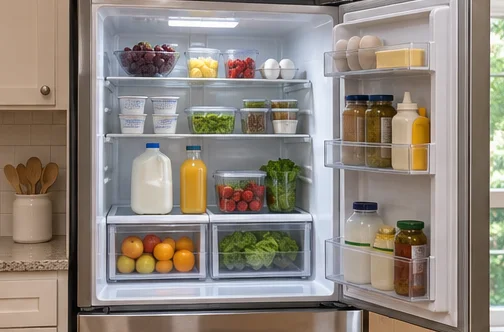
Short answer: Protect the food first: keep the doors shut and check that it’s at 40°F (4°C) or below. Then check the controls and that the door closes fully. If it keeps losing cooling, call an appliance technician.
Check the warning signs below first.
Use this guide at your own risk. It’s general information, not professional advice. By using it, you agree to our Terms of Use and Safety Waiver.
Check for danger first
If any of these are present, stop here.
- Gas odor, smoke or fire. Leave immediately. From outside, call emergency services. For a gas odor, also call the gas utility. Leave lights and switches alone.
- Burning smell, scorch marks, a hot outlet or a buzzing panel. Stop and call an electrician. Stay clear of a suspect panel.
- Water near electrical equipment or exposed wiring. Keep away. Never cross water to reach a plug or breaker. Call a qualified electrician.
None of these warning signs? Open the checks
What to check
Have ready. An appliance thermometer if available, the time cooling was lost, and a cooler with ice.
Protect the food.
Keep the door closed. Move perishables to another fridge or a cooler at 40°F (4°C) or colder. Discard high-risk perishables known to have been above 40°F for more than two hours. Never taste food to test it.
Read the temperature and controls.
An appliance thermometer measures the actual temperature. The setting on the control shows the target. Record both and when you checked.
Check that the door closes fully.
A package can hold the door open or block an interior air vent. Move it and close the door. If temperature keeps rising, arrange service promptly.
When to stop. If time or temperature is uncertain, use the food safety chart below for each food. Discard questionable perishables. For continued loss of cooling, call an appliance technician.
What it costs
- The checks above: free.
- Pro refrigerator repair: $150–$500.
- Common fixes: a new evaporator fan motor or defrost part, $100–$400; coil cleaning by a pro, $60–$100.
- Repair visits usually start with a $50–$150 service call, often credited toward the repair.
National US ranges from 2025–2026 cost guides: Fixr · Thumbtack. Prices in your area may differ.
Common causes
- Temperature setting or demo mode. A control set too warm, or a showroom demo mode left on, stops normal cooling. You can check
- Blocked vents. Food pushed against the vents stops cold air from the freezer reaching the fridge. You can check
- Door not sealing. A worn gasket or something blocking the door lets warm air in. You can check
- Dirty coils or no room to breathe. Dusty condenser coils, or too little space around the fridge, keep it from shedding heat. You can check
- Evaporator fan stopped. The fan that pushes cold air from the freezer into the fridge has failed or is blocked by ice. Call a pro
- Defrost problem. If the defrost system fails, frost builds on the coil behind the freezer panel and blocks the airflow. Call a pro
Sources: GE Appliances · iFixit.
Further reading · FoodSafety.gov
Still stuck? Get help with your exact problem.
Snap a photo and tell the app what you’ve tried. It walks you through your model, one safe step at a time, and tells you when to call a pro. Your first fix in the app is free.
The app is coming soon. Get one email the day it launches.
One email when the app launches. No spam. Privacy Policy