
Refrigerator freezing food
Tell whether the setting, food blocking the vents or the ice maker is overcooling the fresh food side, or whether a part has failed.
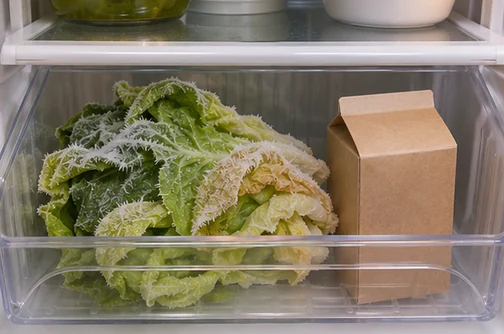
Short answer: Food usually freezes in the fresh food section because the setting is too cold, food is blocking the cold-air vents or an ice maker with no water line is left on. Check the temperature with a thermometer, set it one step warmer, clear the vents and turn that ice maker off. If food still freezes at 37°F to 40°F, call an appliance technician.
Check the warning signs below first.
Use this guide at your own risk. It’s general information, not professional advice. By using it, you agree to our Terms of Use and Safety Waiver.
Check for danger first
If any of these are present, stop here.
- Gas odor, smoke or fire. Leave immediately. From outside, call emergency services. For a gas odor, also call the gas utility. Leave lights and switches alone.
- Burning smell, scorch marks, a hot outlet or a buzzing panel. Stop and call an electrician. Stay clear of a suspect panel.
- Water near electrical equipment or exposed wiring. Keep away. Never cross water to reach a plug or breaker. Call a qualified electrician.
None of these warning signs? Open the checks
What to check
Have ready. An appliance thermometer, the refrigerator’s manual or model number, and room on the counter to move food.
Check the real temperature.
Put an appliance thermometer in the fresh food section and read it the next day; most built-in controls don’t show the actual temperature. The FDA says to keep it at 40°F or below, and makers suggest 37°F to 40°F. At 34°F or below, food can freeze.
Set it one step warmer.
If it reads below 37°F, turn the refrigerator setting one degree or one step warmer. Wait 24 hours before changing it again. If your model has Power Cool or a similar fast-cool option on, turn it off.
Move food away from the vents.
Food pressed against the back or side vents sits in very cold air coming from the freezer. Leave about 2 inches clear around the vents, keep eggs and liquids out of that airflow, and keep produce in its drawers.
Turn the ice maker off if there’s no water line.
If the refrigerator isn’t hooked up to water, make sure the ice maker is off. Left on with no water, it keeps trying to make ice and can make the fresh food section too cold.
When to stop. If food still freezes after 24 hours at 37°F to 40°F with the vents clear, call an appliance repair technician. The temperature sensor (thermistor), air damper and control board are behind panels and need a pro.
What it costs
- The checks above: free.
- Pro refrigerator repair: $138–$350; most people pay about $220.
- Fridge too cold: often $50–$250 to fix.
- Diagnostic fees typically run $60–$100.
National US ranges from 2025–2026 cost guides: Thumbtack · Fixr. Prices in your area may differ.
Common causes
- Temperature set too cold. At 34°F or below, the fresh food section can freeze food. You can check
- Food blocking the vents. Items pressed against the vents sit right in the cold air coming from the freezer. You can check
- Ice maker on with no water line. It keeps trying to make ice and can overcool the fresh food section and crisper drawers. You can check
- Power Cool left on. It runs fresh food cooling at maximum, which may be more than you need. You can check
- Air damper stuck open. The damper controls how much freezer air enters the fresh food side, and stuck open it keeps letting cold air in. Call a pro
- Faulty temperature sensor (thermistor). A bad sensor can make the control board overcool the fresh food section. Call a pro
Sources: Whirlpool · Whirlpool tips · Samsung · GE Appliances · iFixit · FDA.
Further reading · Whirlpool
Still stuck? Get help with your exact problem.
Snap a photo and tell the app what you’ve tried. It walks you through your model, one safe step at a time, and tells you when to call a pro. Your first fix in the app is free.
The app is coming soon. Get one email the day it launches.
One email when the app launches. No spam. Privacy Policy