
Freezer frost buildup
Tell whether the door, humid air or warm food is causing frost, and whether a frost-free freezer’s defrost system has failed.
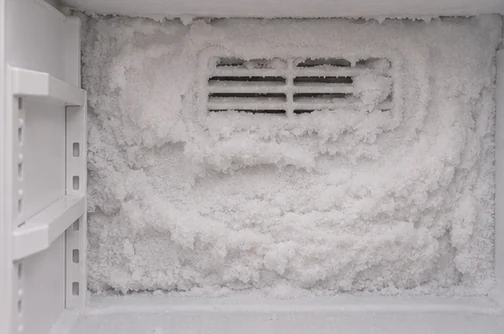
Short answer: Frost usually builds up when humid air gets in through a door that doesn’t seal, is opened often or meets warm food, and manual-defrost freezers frost up by design. Check the door seal, cut down warm air and defrost a manual freezer safely: unplugged, with hot tap water and a plastic scraper. Thick ice on the back wall of a frost-free freezer means the defrost system needs a technician.
Check the warning signs below first.
Use this guide at your own risk. It’s general information, not professional advice. By using it, you agree to our Terms of Use and Safety Waiver.
Check for danger first
If any of these are present, stop here.
- Gas odor, smoke or fire. Leave immediately. From outside, call emergency services. For a gas odor, also call the gas utility. Leave lights and switches alone.
- Burning smell, scorch marks, a hot outlet or a buzzing panel. Stop and call an electrician. Stay clear of a suspect panel.
- Water near electrical equipment or exposed wiring. Keep away. Never cross water to reach a plug or breaker. Call a qualified electrician.
None of these warning signs? Open the checks
What to check
Have ready. A flashlight, warm soapy water and a cloth, coolers or insulated bags, towels, and a plastic or wood scraper.
Make sure the door closes and seals.
Check that no package, shelf or basket keeps the door from closing all the way. Look at the door gasket for tears or gaps and wipe it with warm soapy water. A door that doesn’t seal lets humid air in, and that moisture turns into frost.
Cut down warm, humid air.
Open the door less often and close it quickly; take out everything you need in one trip. Let hot food cool before you freeze it, and don’t overpack, so air can move.
Know which freezer you have.
Manual-defrost freezers build frost by design and need defrosting when it reaches about 1/4 inch thick. Frost-free freezers melt frost on their own, so thick ice on the back wall points to a failed defrost system.
Defrost a manual freezer safely.
Turn the control to OFF and unplug it, move food to coolers, and set pans of hot tap water inside with the door open. Scrape only with a plastic or wood scraper; never use an ice pick, a metal tool, boiling water or any electrical device such as a hair dryer or heat gun. Wipe it dry, plug it back in and reset the control.
When to stop. If a frost-free freezer has thick ice on the back wall, or frost comes back quickly even though the door seals, stop and call an appliance repair technician. Don’t chip at the ice. The defrost heater, sensor and control are behind the back panel.
What it costs
- The checks above: free.
- Pro freezer repair: $135–$353 on average.
- Common fixes: a new defrost sensor (defrost thermostat), $75–$200; a new door seal, $150–$500.
National US ranges from 2025–2026 cost guides: Thumbtack · Fixr. Prices in your area may differ.
Common causes
- Door not closing or sealing. Something between the gasket and cabinet, or a worn gasket, lets humid room air in to freeze. You can check
- Door opened often or left open. Each long or frequent opening lets in humid air, which turns into frost. You can check
- Warm food or humid weather. Warm items and high summer humidity add moisture inside the freezer. You can check
- Manual-defrost freezer due for defrosting. Frost builds up by design and should be removed at about 1/4 inch thick. You can check
- Defrost heater failed. Without it, frost stays on the cooling coil and the back wall of a frost-free freezer ices over. Call a pro
- Defrost sensor or control failed. If the defrost cycle doesn’t run fully, ice keeps building up behind the back panel. Call a pro
Sources: Whirlpool · Whirlpool frost tips · GE freezer manual · iFixit.
Further reading · Whirlpool
Still stuck? Get help with your exact problem.
Snap a photo and tell the app what you’ve tried. It walks you through your model, one safe step at a time, and tells you when to call a pro. Your first fix in the app is free.
The app is coming soon. Get one email the day it launches.
One email when the app launches. No spam. Privacy Policy