
Fridge not cold but freezer is
The freezer makes the cold air and a fan pushes it into the fridge, so a warm fridge with a cold freezer usually means that airflow is blocked or has stopped.
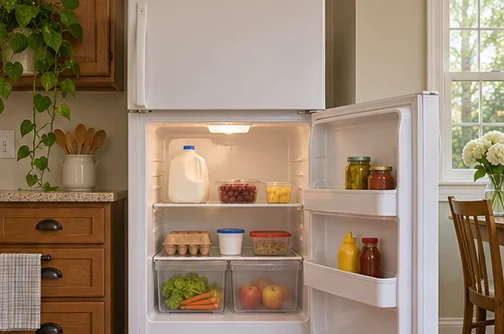
Short answer: The cold air comes from the freezer, so the airflow into the fridge is probably blocked or the fan has stopped. Check the settings, clear the vents and test the door seal. Frost on the vents, a silent fan or a fridge still warm after a day means a technician.
Check the warning signs below first.
Use this guide at your own risk. It’s general information, not professional advice. By using it, you agree to our Terms of Use and Safety Waiver.
Check for danger first
If any of these are present, stop here.
- Gas odor, smoke or fire. Leave immediately. From outside, call emergency services. For a gas odor, also call the gas utility. Leave lights and switches alone.
- Burning smell, scorch marks, a hot outlet or a buzzing panel. Stop and call an electrician. Stay clear of a suspect panel.
- Water near electrical equipment or exposed wiring. Keep away. Never cross water to reach a plug or breaker. Call a qualified electrician.
None of these warning signs? Open the checks
What to check
Have ready. A fridge thermometer, a sheet of paper and a cooler with ice for food that needs to stay cold.
Check the temperature settings.
Set the fridge to about 37°F (3°C) and the freezer to 0°F (−18°C). A new setting can take up to a day to settle.
Clear the vents.
Keep food about 2 inches (5 cm) from the air vents and don’t overpack the shelves. If the vents or the back wall are covered in frost, airflow is blocked, which points to a defrost problem for a technician.
Test the door seal.
Close the door on a sheet of paper. If it slides out with no pull, the seal is letting cold air escape.
Listen for the fan.
On many models, pressing and holding the freezer’s door switch with the door open lets you hear the fan. If it is silent, clicking or loud, call an appliance technician.
When to stop. Keep food at 40°F (4°C) or below and discard perishables that were warmer for 2 hours or more. Call an appliance technician if you see frost on the vents, the fan is silent or noisy, or the fridge stays warm after a day. Fans, dampers and defrost parts sit behind panels.
What it costs
- The checks above: free.
- Pro refrigerator repair: $150–$500.
- Common fixes: a new evaporator fan motor or defrost part, $100–$400; coil cleaning by a pro, $60–$100.
- Repair visits usually start with a $50–$150 service call, often credited toward the repair.
National US ranges from 2025–2026 cost guides: Fixr · Thumbtack. Prices in your area may differ.
Common causes
- Temperature setting or demo mode. A control set too warm, or a showroom demo mode left on, stops normal cooling. You can check
- Blocked vents. Food pushed against the vents stops cold air from the freezer reaching the fridge. You can check
- Door not sealing. A worn gasket or something blocking the door lets warm air in. You can check
- Dirty coils or no room to breathe. Dusty condenser coils, or too little space around the fridge, keep it from shedding heat. You can check
- Evaporator fan stopped. The fan that pushes cold air from the freezer into the fridge has failed or is blocked by ice. Call a pro
- Defrost problem. If the defrost system fails, frost builds on the coil behind the freezer panel and blocks the airflow. Call a pro
Sources: GE Appliances · iFixit.
Further reading · Samsung
Still stuck? Get help with your exact problem.
Snap a photo and tell the app what you’ve tried. It walks you through your model, one safe step at a time, and tells you when to call a pro. Your first fix in the app is free.
The app is coming soon. Get one email the day it launches.
One email when the app launches. No spam. Privacy Policy