
Refrigerator making noise
Tell normal running sounds from a noise that needs a technician, and fix the simple causes yourself.
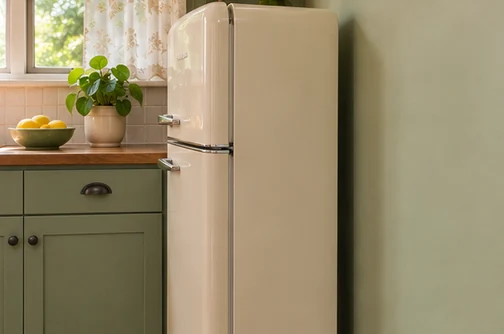
Short answer: Clicks, hums, gurgles and pops are usually normal running sounds. Rattles and vibration often come from things on top, the refrigerator touching a wall or cabinet, uneven legs, or an ice maker that’s on with no water, which you can fix yourself. Grinding or scraping from a fan, or any very loud new noise, needs an appliance technician.
Check the warning signs below first.
Use this guide at your own risk. It’s general information, not professional advice. By using it, you agree to our Terms of Use and Safety Waiver.
Check for danger first
If any of these are present, stop here.
- Gas odor, smoke or fire. Leave immediately. From outside, call emergency services. For a gas odor, also call the gas utility. Leave lights and switches alone.
- Burning smell, scorch marks, a hot outlet or a buzzing panel. Stop and call an electrician. Stay clear of a suspect panel.
- Water near electrical equipment or exposed wiring. Keep away. Never cross water to reach a plug or breaker. Call a qualified electrician.
None of these warning signs? Open the checks
What to check
Have ready. A flashlight, a level and your owner’s manual for adjusting the leveling legs.
Learn the normal sounds.
Clicks come from the controls and defrost timer switching on and off. Gurgling or boiling is refrigerant moving, and a gurgle in the door right after you close it is water in the drain tube. A hum is the compressor running or the ice maker filling, and pops come from parts changing temperature.
Clear the top and give it room.
Take things off the top of the refrigerator and away from its sides, since they can make it vibrate. Make sure it isn’t touching a wall, cabinet or another appliance. Moving it out about an inch can stop a rattle.
Make sure it sits level and steady.
The leveling legs should touch the floor firmly, and the wheels shouldn’t carry the weight. Adjust the legs as your manual shows. A refrigerator that rocks can rattle and vibrate.
Turn off the ice maker if no water is hooked up.
An ice maker that’s on with no water supply can buzz, rattle or vibrate as it tries to fill. If your refrigerator isn’t connected to water, turn the ice maker off. If it is connected, make sure the water supply is turned on.
When to stop. Stop and call an appliance technician if you hear grinding or scraping from a fan, a steady loud knock that isn’t ice dropping, a rattle from the bottom after it’s level and clear, or any noise that is very loud or new, especially if it isn’t cooling. Don’t remove panels, and never use a hair dryer or other heat to melt ice around a fan.
What it costs
- The checks above: free.
- Pro refrigerator repair: $200–$500, often about $400.
- Noisy refrigerator repair: $200–$300. A fan repair, $120–$200.
National US ranges from 2025–2026 cost guides: Fixr · This Old House. Prices in your area may differ.
Common causes
- Normal running sounds. Clicks, hums, gurgles and pops come from the controls, compressor, refrigerant and parts warming and cooling. You can check
- Items on top or something touching it. Objects on top, or a wall or cabinet against the side, make it vibrate and make the noise louder. You can check
- Not level. If the leveling legs don’t sit firmly on the floor, the cabinet can rock and rattle. You can check
- Ice maker on with no water. It keeps trying to fill and can buzz, rattle or vibrate. You can check
- Fan blocked by ice or worn out. Ice around a fan or worn fan bearings cause grinding or scraping that comes back until it’s repaired. Call a pro
- Loose drain pan. Over time the pan under the refrigerator can shift or its mounts loosen, and it rattles against the housing. Call a pro
Sources: GE Appliances · Samsung · LG · AppliancePartsPros.
Further reading · GE Appliances
Still stuck? Get help with your exact problem.
Snap a photo and tell the app what you’ve tried. It walks you through your model, one safe step at a time, and tells you when to call a pro. Your first fix in the app is free.
The app is coming soon. Get one email the day it launches.
One email when the app launches. No spam. Privacy Policy