
Window AC not cooling
Check the settings, the filter, the airflow and the fit in the window, and tell whether the unit is too small for the room.
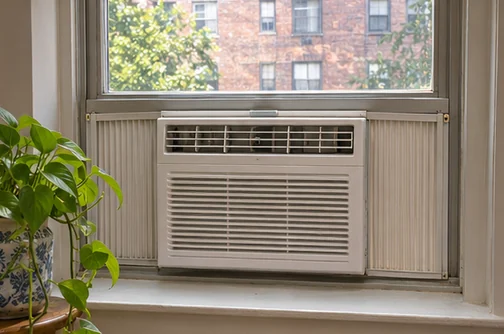
Short answer: Usually it’s the wrong mode or setting, a dirty filter, blocked airflow or ice on the coil, gaps around the unit, or a unit too small for the room. Check the setting, clean the filter, clear the airflow, seal the gaps and compare the BTU rating to the room. If it still won’t cool, call a technician; refrigerant and compressor problems are pro work.
Check the warning signs below first.
Use this guide at your own risk. It’s general information, not professional advice. By using it, you agree to our Terms of Use and Safety Waiver.
Check for danger first
If any of these are present, stop here.
- Gas odor, smoke or fire. Leave immediately. From outside, call emergency services. For a gas odor, also call the gas utility. Leave lights and switches alone.
- Burning smell, scorch marks, a hot outlet or a buzzing panel. Stop and call an electrician. Stay clear of a suspect panel.
- Water near electrical equipment or exposed wiring. Keep away. Never cross water to reach a plug or breaker. Call a qualified electrician.
None of these warning signs? Open the checks
What to check
Have ready. A tape measure, the BTU rating from the unit’s label, a vacuum or soft brush, and the owner’s manual.
Check the mode and the setting.
Set it to Cool, not Fan, Dry or Energy Saver, and turn it to its coldest setting. Plug it straight into a wall outlet, not an extension cord. Give it at least 30 minutes; a working unit blows air about 17 to 20°F cooler than the air it pulls in.
Clean the filter.
Turn the unit off, take out the filter behind the front grille and vacuum or brush off the dust. GE says to clean it at least every 30 days, and LG every two weeks in peak summer.
Clear the airflow and watch for ice.
Move curtains, blinds and furniture away from the front, and make sure nothing outside blocks the back. If you see ice on the coil, turn to a warmer setting and run the fan on high until it melts. Ice usually means it’s below 70°F outside.
Seal the gaps and check the size.
Close windows and doors, and close gaps around the unit with the side panels and insulation it came with. Compare the BTU rating to the room: Energy Star suggests about 5,000 BTU for 100 to 150 sq ft and 8,000 BTU for 300 to 350 sq ft, plus 10% for a very sunny room and 4,000 BTU for a kitchen.
When to stop. If it still blows warm air after these checks, or the outside coils are packed with dirt, stop and call an appliance or HVAC technician. A refrigerant leak or failed compressor is sealed-system work; a pro can tell you whether a repair is worth it or it’s time to replace the unit.
What it costs
- The checks above: free.
- Pro window AC repair: $75–$350.
- Diagnostic fee: about $75–$150, which some companies apply toward the repair.
National US ranges from 2025–2026 cost guides: Fixr · This Old House. Prices in your area may differ.
Common causes
- Wrong mode or setting. In Fan, Dry or energy-saving modes, or on a warm setting, the unit won’t blow cold air. You can check
- Dirty filter. A dirty filter cuts airflow and reduces cooling. You can check
- Blocked airflow or an iced coil. Curtains or furniture in front, or ice on the coil, keep air from moving across it. You can check
- Gaps, or a unit too small for the room. Open windows, gaps around the unit, strong sun or a room that’s too big let in more heat than it can remove. You can check
- Dirty outdoor coil. Coils on the outside clogged with dirt or soot can’t shed heat and may need professional cleaning. Call a pro
- Refrigerant leak. Finding and fixing a leak takes leak-detection equipment and a technician. Call a pro
Sources: GE Appliances · LG · Frigidaire · Energy Star · Trane (refrigerant leaks).
Further reading · GE Appliances
Still stuck? Get help with your exact problem.
Snap a photo and tell the app what you’ve tried. It walks you through your model, one safe step at a time, and tells you when to call a pro. Your first fix in the app is free.
The app is coming soon. Get one email the day it launches.
One email when the app launches. No spam. Privacy Policy