
AC drain line clogged
Clear a clogged AC condensate drain line from its outside end, and know when the drain pan or pump needs a technician.
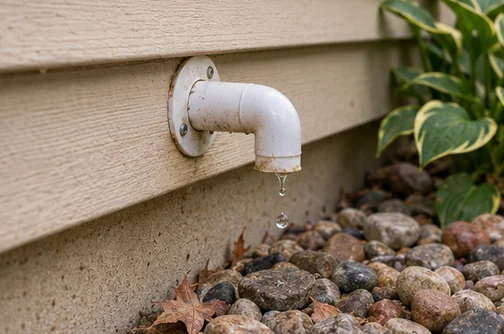
Short answer: Water around the indoor unit or an AC that shut itself off often means the condensate drain is clogged and the float switch tripped. Turn the system off, vacuum the line from its outside end and flush it only as your maker says. If it still backs up, call an HVAC technician.
Check the warning signs below first.
Use this guide at your own risk. It’s general information, not professional advice. By using it, you agree to our Terms of Use and Safety Waiver.
Check for danger first
If any of these are present, stop here.
- Gas odor, smoke or fire. Leave immediately. From outside, call emergency services. For a gas odor, also call the gas utility. Leave lights and switches alone.
- Burning smell, scorch marks, a hot outlet or a buzzing panel. Stop and call an electrician. Stay clear of a suspect panel.
- Water near electrical equipment or exposed wiring. Keep away. Never cross water to reach a plug or breaker. Call a qualified electrician.
None of these warning signs? Open the checks
What to check
Have ready. A wet/dry vacuum, a rag or towel, a flashlight and the AC’s breaker location. Distilled vinegar only if your system’s maker recommends it.
Look for the signs, then turn it off.
Water around the indoor unit, a musty smell, or an AC that shut itself off can all mean a clogged drain line. A float switch shuts many systems down when the drain pan fills. Turn the thermostat off and switch off the AC’s breaker.
Find the outside end of the drain.
Find where the condensate drain line exits outside the house. It’s usually a small plastic pipe. Clear away anything blocking the end.
Vacuum the clog out.
Hold the wet/dry vac hose over the end of the pipe and seal the gap with a rag. Run the vac to pull the clog out of the line.
Flush only the way your maker says.
Carrier’s guide pours one cup of distilled vinegar into the indoor access port, then clean water to test the flow. Use hot, not boiling, water. If you can’t reach an access port without removing a panel, skip this step, then switch the breaker back on.
When to stop. If water still won’t drain, the system won’t restart, a ceiling is stained, or clogs keep coming back, stop and call an HVAC technician. The drain pan, the condensate pump and anything behind a panel are jobs for a pro.
What it costs
- The checks above: free.
- Pro AC drain line clearing: $75–$250.
- Drain pan replacement: $200–$600.
- Most HVAC companies charge a $75–$150 diagnostic fee, and some apply it to the repair.
National US ranges from 2025–2026 cost guides: Fixr · This Old House. Prices in your area may differ.
Common causes
- Clog near the outside end. Dirt, debris or growth in the line keeps condensate from draining, and a wet/dry vac at the outside end can pull it out. You can check
- Deep or repeat clog. Mold and debris deeper in the line may need a professional cleaning to stop clogs from coming back. Call a pro
- Clogged or cracked drain pan. A backed-up or damaged pan overflows and can damage ceilings and drywall. Call a pro
- Tripped overflow switch. It shuts off the compressor and fans when water rises in the pan, so the AC stays off until the water drains. Call a pro
Sources: Carrier · Trane · Trane overflow switch.
Further reading · Carrier
Still stuck? Get help with your exact problem.
Snap a photo and tell the app what you’ve tried. It walks you through your model, one safe step at a time, and tells you when to call a pro. Your first fix in the app is free.
The app is coming soon. Get one email the day it launches.
One email when the app launches. No spam. Privacy Policy